
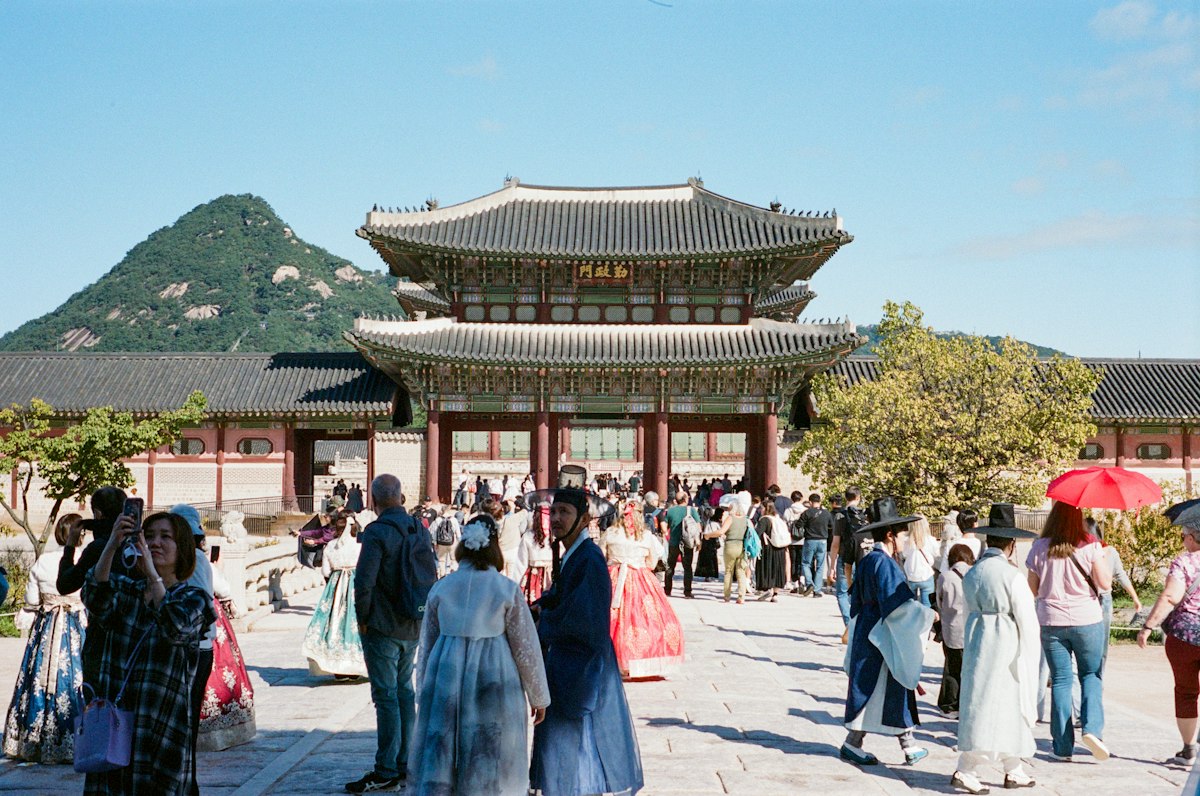

Standing majestically against the backdrop of Bugaksan Mountain, Gyeongbokgung Palace is the crown jewel of Seoul’s historical landmarks. Built in 1395 as the main royal palace of the Joseon Dynasty, this sprawling complex represents the pinnacle of traditional Korean architecture, statecraft, and culture. For any international traveler stepping foot in South Korea, visiting Gyeongbokgung is not just a sightseeing stop—it is an immersive journey back in time to an era of kings, scholars, and elegant court life.
Planning a visit to this massive historical site can feel overwhelming with choices about ticketing, cultural etiquette, and timing. Whether you want to witness the famous Royal Guard Changing Ceremony, rent a beautiful traditional Hanbok, or find the best photo spots without the crowds, this ultimate guide covers everything you need to know for a seamless and memorable experience.
- Admission: 3,000 KRW for adults, but completely free if you wear a Hanbok.
- Opening Hours: 9:00 AM to 5:00 PM – 6:30 PM (varies by season). Closed on Tuesdays.
- Hanbok Rental: Plentiful shops nearby offer rentals starting around 10,000 to 20,000 KRW.
- Must-See Event: The Royal Guard Changing Ceremony occurs daily at 10:00 AM and 2:00 PM.
- Best Time to Visit: Weekday mornings right at 9:00 AM or during the special evening opening seasons in spring and autumn.
Gyeongbokgung Palace Tickets and Admission Guidelines

Accessing Gyeongbokgung Palace is remarkably affordable, making it one of the most budget-friendly cultural attractions in any global capital. Standard admission tickets can be purchased directly at the ticket booths located just inside the main Gwanghwamun Gate. Both cash and international credit cards are widely accepted. For those traveling in groups or planning to visit multiple royal sites, there are several ticketing options to consider.
If you plan to explore Seoul’s rich history deeply, you might want to purchase the Integrated Palace Ticket. This pass costs 10,000 KRW and grants entry to Seoul’s Four Major Palaces (Gyeongbokgung, Changdeokgung including the Secret Garden, Changgyeonggung, and Deoksugung) as well as the Jongmyo Shrine. The pass is valid for three months, saving you both money and wait times at individual ticket windows.
| Visitor Category | Ticket Price | Key Conditions & Special Rules |
|---|---|---|
| Standard Adults (Ages 19–64) | 3,000 KRW (~$2.30 USD) | Standard single entry to the main palace grounds. |
| Children & Youth (Ages 7–18) | 1,500 KRW (~$1.15 USD) | Applicable for foreign children. Kids under 7 enter free. |
| Seniors (Ages 65 and over) | Free | Requires a valid passport or ID card to verify age at the gate. |
| Hanbok Wearers (All Nationalities) | Free | Must wear a full, proper traditional or themed Hanbok to qualify. |
The Hanbok Rental Experience: Free Entry and Timeless Photos
One of the most popular and delightful cultural activities in Seoul is renting a Hanbok (traditional Korean clothing) before entering Gyeongbokgung. The Cultural Heritage Administration offers free admission to anyone wearing a Hanbok as a way to promote and preserve traditional culture. This initiative has made the palace courtyard a colorful sea of vibrant pastels, rich jewel tones, and flowing silk skirts.
Dozens of Hanbok rental shops are situated within a five-minute walk of the palace, particularly around Anguk Station, Gyeongbokgung Station, and the historic Bukchon Hanok Village. Rental packages are highly customizable, typically ranging from 2-hour, 4-hour, to full-day options. Prices usually start around 10,000 to 15,000 KRW for traditional designs, and 20,000 to 35,000 KRW for “themed” or “royal” Hanbok, which feature intricate gold embroidery, layered petticoats, and modern pastel color schemes.
When you visit a rental shop, the friendly staff will assist you in selecting a skirt (chima) or trousers (baji) and matching jacket (jeogori). Most rental packages include basic hairstyling—such as traditional braids adorned with ribbons (daenggi)—and a small matching handbag to carry your essentials. For a small additional fee, you can add traditional hairpins, hats, or premium accessories. Walking through the grand stone gates of Gyeongbokgung in a Hanbok is not only a fantastic way to immerse yourself in Korean history, but it also yields stunning, cinematic photographs that will highlight your trip.
Best Times to Visit: Seasons, Hours, and the Guard Ceremony
To get the most out of your visit, timing is everything. Gyeongbokgung Palace experiences distinct seasonal shifts and daily peak hours. Spring (April to June) and Autumn (September to November) are universally considered the best times of year to visit. During spring, cherry blossoms frame the ancient stone pavilions, while autumn transforms the palace gardens into a breathtaking canvas of deep reds, vibrant oranges, and golden gingko leaves. However, these seasons are also the busiest, so planning ahead is crucial.
To beat the crowds and enjoy a peaceful stroll, arrive exactly at 9:00 AM when the gates open. The early morning light is soft and perfect for photography, and you will have a brief window to enjoy the vast courtyards before tour buses arrive. Alternatively, visiting in the late afternoon offers a warm, golden glow as the sun begins to set behind the majestic peaks of Bugaksan Mountain.
The Royal Guard Changing Ceremony
A major highlight of any Gyeongbokgung visit is the Royal Guard Changing Ceremony (Sumunjang Ceremony). This vibrant, highly coordinated reenactment showcases the traditional uniforms, weapons, and musical instruments of the Joseon guards who protected the royal family. The ceremony takes place in the courtyard between Gwanghwamun Gate and Heungnyemun Gate. It is completely free to watch and occurs twice daily at 10:00 AM and 2:00 PM (except on Tuesdays). Arrive about 15 minutes early to secure a good spot along the viewing ropes.
Gyeongbokgung Palace Night Viewing
If you are lucky enough to visit Seoul during the spring or autumn night-opening seasons, do not miss the Gyeongbokgung Palace Night Viewing. During these limited-run events, the palace is beautifully illuminated with soft, warm spotlights, casting dramatic reflections on the ponds and highlighting the intricate roof eaves against the dark night sky. Tickets for the night viewing are highly coveted and must be reserved in advance, though foreign tourists can often purchase a limited number of on-site tickets at the designated ticket booth by showing their passport.
Key Highlights to Explore Inside the Palace Grounds
Gyeongbokgung is vast, spanning over 40 hectares. To ensure you do not miss its most significant structures, keep an eye out for these architectural masterpieces during your walk:
Geunjeongjeon Hall (The Throne Hall): This is the imposing, double-tiered main hall where the king held official audiences, received foreign envoys, and conducted state affairs. Take a close look at the stone-paved courtyard; the rough, uneven granite stones were intentionally designed to reduce glare and prevent the court officials’ leather shoes from slipping.
Gyeonghoeru Pavilion: Rising elegantly over a large, scenic lotus pond, this raised wooden pavilion supported by 48 massive stone pillars served as the venue for royal banquets and state feasts. The reflection of the pavilion in the still water, framed by weeping willows, is one of the most iconic views in Korea.
Hyangwonjeong Pavilion: Located in the quieter, northern section of the palace, this hexagonal wooden pavilion sits on a small island in the middle of a peaceful pond, connected by a picturesque wooden bridge. It served as a private place of rest and relaxation for the royal family and is particularly stunning when surrounded by autumn foliage.
Pro Tips for Tourists
- Wear Comfortable Walking Shoes: The palace grounds are expansive and paved with gravel, sand, and stone. Even if you are wearing a Hanbok, make sure to wear comfortable flats or sneakers underneath your long skirt to prevent sore feet.
- Check the Calendar: Gyeongbokgung Palace is closed every single Tuesday. If Tuesday falls on a public holiday, the palace may open, but it is best to plan your visit for any other day of the week to avoid disappointment.
- Take Advantage of Free Guided Tours: The palace offers free guided tours in English, Chinese, and Japanese multiple times a day. The English tours depart from the information center inside Heungnyemun Gate at 11:00 AM, 1:30 PM, and 3:30 PM.
- Rent Hanbok in Advance Online: Booking your Hanbok rental online through popular travel platforms often secures you a significant discount and guarantees your preferred time slot at top-rated shops.
- Keep Your Passport Handy: If you plan to rent an audio guide, purchase senior discounts, or buy Gyeongbokgung night tour tickets, you will need to present your physical passport for verification.
Frequently Asked Questions
How long does it take to tour Gyeongbokgung Palace?
A standard visit covering the main throne hall, Gyeonghoeru Pavilion, and a few photo spots takes about 1.5 to 2 hours. If you plan to wear a Hanbok, take photos at a leisurely pace, and visit the National Folk Museum of Korea (located within the palace grounds), you should budget 3 to 4 hours.
Can foreigners rent Hanbok, and is it considered cultural appropriation?
Absolutely! Koreans highly encourage foreign tourists to wear Hanbok. It is viewed as a sign of respect, appreciation, and interest in Korea’s rich cultural heritage. As long as you wear the garment respectfully and follow the shop’s styling guidelines, you will be welcomed with warm smiles and free entry to the palace.
What should I do if it rains during my scheduled visit?
While Gyeongbokgung is primarily an outdoor attraction, a rainy day shouldn’t ruin your plans. The wet stone pathways and dark rain clouds add a moody, romantic atmosphere to the palace. You can seek shelter under the wide eaves of the grand halls, carry a traditional-style umbrella, or explore the indoor exhibits at the National Palace Museum of Korea, which is located right next to the palace entrance and offers free admission.