

Selecting the perfect neighborhood to drop your luggage in Seoul can shape your entire South Korean journey. As a sprawling megacity seamlessly blending ancient dynasties with futuristic architecture, Seoul spans 25 distinct districts, each offering its own unique rhythm, price point, and cultural identity. For first-time visitors, navigating this vast metropolis might feel slightly overwhelming, especially when deciding where to set up your home base for the trip.
Fortunately, three primary districts consistently top the recommendation lists for international travelers: Hongdae, Myeongdong, and Gangnam. Each district caters to a completely different travel style. Are you looking for indie art, youth energy, and affordable nightlife? Or do you prefer central convenience near historic palaces and endless street food markets? Perhaps you envision staying amid glass skyscrapers, high-end shopping avenues, and luxury dining. In this comprehensive guide, we will break down the pros, cons, transport links, and distinct atmosphere of Hongdae, Myeongdong, and Gangnam to help you pick the best accommodation spot for your Seoul adventure.
- Hongdae: Best for solo travelers, budget backpackers, young adults, indie art lovers, and nightlife enthusiasts. Direct airport train connection.
- Myeongdong: Best for first-timers with short stays, families, street food lovers, shopping fans, and quick access to major historic sites.
- Gangnam: Best for luxury travelers, business trips, high-end fashion shopping, modern city architecture, and K-pop enthusiasts.
Hongdae: Youthful Energy, Budget Stays, and Creative Vibe

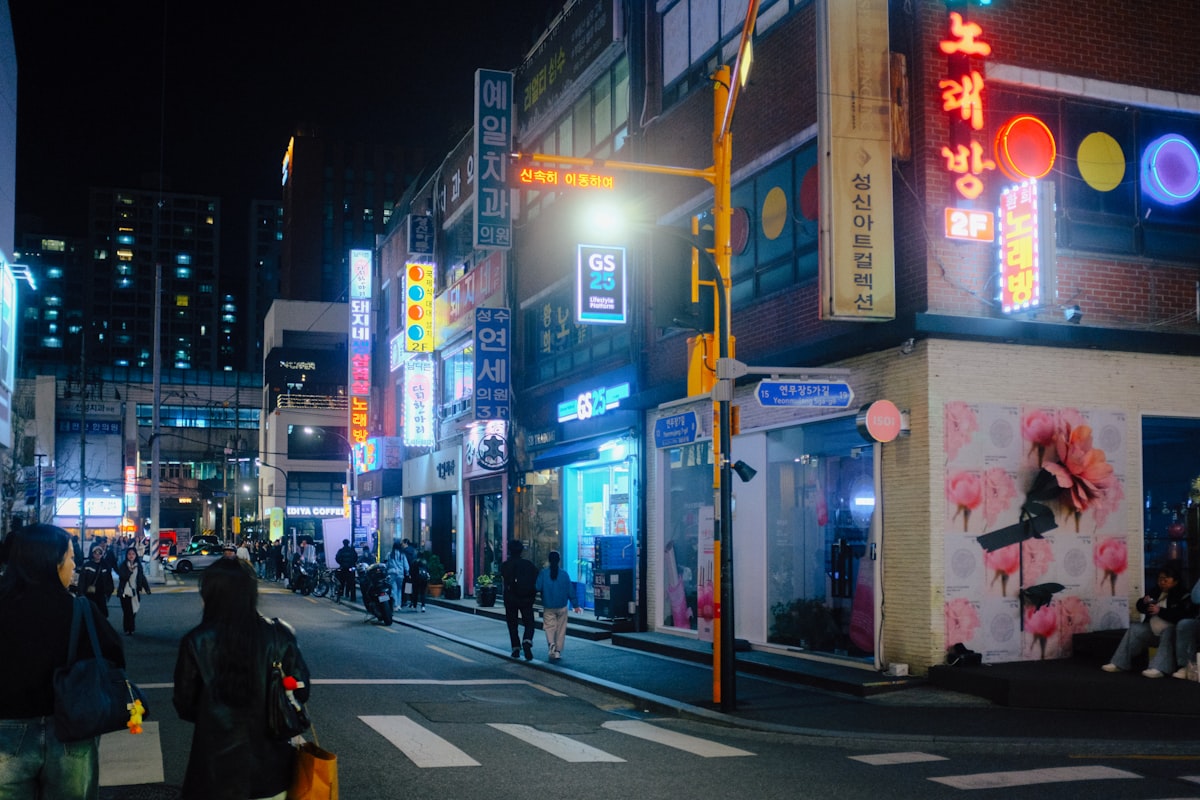
Located in western Seoul, Hongdae (named after the nearby prestigious Hongik University) is the dynamic epicenter of Seoul’s youth culture, indie art scene, and live entertainment. Walking through Hongdae’s bustling pedestrian streets, you will encounter energetic buskers, street dancers, indie fashion boutiques, retro photo booths, and quirky themed cafes at every corner. The district radiates a relaxed, creative, and welcoming aura that makes foreign visitors feel at home instantly.
Why Stay in Hongdae?
One of Hongdae’s primary advantages for international arrivals is transit convenience. Hongik University Station is directly connected to Incheon International Airport and Gimpo Airport via the AREX (Airport Railroad Express) all-stop train. This means you can roll your bags onto the train at the airport and exit directly into your neighborhood without making complicated subway transfers. Additionally, Line 2 (the circular green subway line) passes through Hongdae, giving you seamless transit to major destinations across Seoul.
Accommodation in Hongdae is diverse and highly wallet-friendly. It offers Seoul’s best selection of boutique hostels, mid-range lifestyle hotels, and unique airbnbs. Food options are equally accessible, featuring budget K-BBQ joints, late-night pub grub, and affordable takeaway stalls catering to university students.
Drawbacks of Hongdae
Hongdae rarely sleeps. If your hotel or guesthouse is situated near the main nightlife strip or pedestrian walking street, late-night music, street crowds, and bar chatter can extend well past 3:00 AM. Light sleepers should carefully select accommodation located in quieter neighboring pockets such as Yeonnam-dong or Hapjeong, which offer peaceful tree-lined streets just a few minutes away on foot.
Myeongdong: Central Hub, Street Food Heaven, and Easy Sightseeing
If your goal for your first Seoul trip is to tick off maximum major tourist sights with minimal travel time, Myeongdong is the undisputed heavyweight contender. Nestled right in the heart of central Seoul, south of the historical Jongno district, Myeongdong is world-famous for its multi-story Korean skincare shops, global retail flagships, and iconic night market.
Why Stay in Myeongdong?
Location is Myeongdong’s ultimate superpower. Iconic historic landmarks such as Gyeongbokgung Palace, Changdeokgung Palace, Bukchon Hanok Village, Insadong, and N Seoul Tower (Namsan) are all reachable within 10 to 20 minutes by subway, city bus, or taxi. Myeongdong Station (Line 4) and nearby Euljiro 1-ga Station (Line 2) make traveling to either side of the city effortless.
The area is exceptionally tourist-friendly. Hotel front desk staff, restaurant servers, and street vendors almost universally speak functional English (along with Mandarin and Japanese). The neighborhood is lined with reputable hotel brands, mid-scale business properties, and currency exchange booths offering favorable rates. Furthermore, as night falls, the central pedestrian street transforms into an incredible culinary avenue filled with sizzling skewers, grilled lobster, egg bread (gyeran-ppang), and sweet hotteok pancakes.
Drawbacks of Myeongdong
Myeongdong is heavily tailored toward commercial tourism. Consequently, it lacks a tranquil, authentic residential feel. Street grid corridors become packed with large tourist groups between late afternoon and 10:00 PM. Additionally, food pricing in the main street market is often marked up higher compared to traditional local markets like Gwangjang or Mangwon.
Gangnam: Modern Luxury, High-End Style, and K-Pop Culture
Made famous worldwide by Psy’s global chart-topping hit, Gangnam (literally meaning South of the River) reflects the sleek, wealthy, and modern side of 21st-century Seoul. This sprawling district south of the Han River is defined by soaring glass skyscrapers, wide multi-lane avenues, luxury shopping complexes, and prestigious medical tourism facilities.
Why Stay in Gangnam?
Gangnam is ideal for travelers seeking upscale accommodation, top-tier international hotel chains (like Park Hyatt, InterContinental, and JW Marriott), and sophisticated dining. If you enjoy modern architecture, designer fashion boutiques along Apgujeong Rodeo, or exploring the massive subterranean Starfield COEX Mall (home to the breathtaking Starfield Library), Gangnam provides an unforgettable, polished city experience.
For modern pop culture lovers, Gangnam is ground zero for entertainment company headquarters, official K-pop pop-up stores, and luxury aesthetic clinics. The nightlife here is upscale, featuring exclusive lounge bars and high-end underground dance clubs.
Drawbacks of Gangnam
Because Gangnam is situated south of the Han River, traveling north to visit historic destinations like Gyeongbokgung Palace or traditional neighborhoods takes anywhere from 35 to 50 minutes on public transit. The district is also wide and spread out, meaning you will do significantly more subway traveling compared to walkable central pockets. Accommodation and dining costs in Gangnam are generally higher than in northern districts.
| Neighborhood | Overall Vibe | Average Budget | Transit to Airport | Best Suitable For |
|---|---|---|---|---|
| Hongdae | Youthful, creative, energetic, nightlife-driven | Budget to Mid-Range ($ to $$) | Direct AREX train (~55 mins) | Solo travelers, students, nightlife lovers, budget travelers |
| Myeongdong | Bustling tourist hub, shopping, street food | Mid-Range ($$ to $$$) | Airport Bus or AREX + Transfer (~65 mins) | First-timers, families, shoppers, sightseers |
| Gangnam | Modern, luxurious, corporate, upscale fashion | High-End Luxury ($$$ to $$$$) | Limousine Bus (~70 mins) | Luxury travelers, business visits, K-pop fans |
Pro Tips for Tourists
- Download Naver Map or KakaoMap: Google Maps does not provide turn-by-turn walking or driving navigation in South Korea due to local mapping data security laws. Download Naver Map (available in English) before your trip.
- Get a T-Money Card Immediately: Pick up a transit card (T-Money or WOWPASS) at convenience stores (GS25, CU, Seven-Eleven) inside Incheon Airport to easily pay for subway, bus, and taxi rides nationwide.
- Match the District to Your Itinerary Length: If you are staying in Seoul for less than 4 days, Myeongdong or Hongdae will save you hours in commuting time compared to Gangnam.
- Consider Luggage Transport Services: If arriving on early morning or late-night flights, consider booking an airport luggage delivery service to forward your bags directly to your hotel so you can explore hands-free.
Frequently Asked Questions
Is Myeongdong or Hongdae better for first-time visitors to Seoul?
Myeongdong is generally better if your priority is sightseeing classic attractions like Gyeongbokgung Palace, N Seoul Tower, and local markets with minimal commuting time. Hongdae is better if you prefer a younger, artistic neighborhood vibe, direct airport train connections, budget accommodations, and lively evening cafes or bars.
Is Hongdae safe for solo female travelers at night?
Yes, Hongdae and Seoul in general are remarkably safe for solo travelers at any hour of the night. Streets stay illuminated and populated late into the evening. Standard travel safety common sense applies, but violent crime is extremely low across South Korea.
Should I stay in Gangnam if I want to see historic places?
If your itinerary centers around historic palaces, traditional Hanok villages, and historical museums, Gangnam is less convenient due to transit times across the Han River (35 to 50 minutes each way). Gangnam is best suited for travelers focused on modern city life, luxury shopping, K-pop, or contemporary events.