

Taking a day trip from Seoul to Busan is one of the most exciting adventures you can fit into a South Korean travel itinerary. Thanks to the ultra-efficient KTX (Korea Train eXpress) high-speed rail, traveling over 320 kilometers across the country takes just two and a half hours. You can leave the bustling capital early in the morning, spend your day walking along sandy beaches, exploring vibrant street markets, and tasting legendary local dishes, and return to your Seoul hotel by nightfall.
While spending two or three days in Busan is ideal, time-strapped international travelers can easily experience the essence of Korea’s dynamic southern coast in a single day. The key to a successful day trip lies in mastering the KTX train timing, focusing on a compact cluster of coastal attractions, and knowing precisely which local specialties to eat. This comprehensive guide breaks down everything you need to plan a seamless, stress-free day trip to Busan.
- Transit Time: KTX takes 2 hours 15 minutes to 2 hours 45 minutes from Seoul Station to Busan Station.
- Recommended Departure: Catch a train between 05:30 AM and 07:00 AM; return from Busan around 08:30 PM or 09:00 PM.
- Top Attractions Covered: Haeundae Blueline Park, Haeundae Beach, Dongbaekseom Island, and Gwangalli Beach.
- Must-Try Foods: Dwaeji Gukbap (pork soup), Milmyeon (wheat noodles), Ssiat Hotteok (seed pancake), and Busan Eomuk (fishcakes).
- Essential Tip: Book KTX tickets exactly 30 days in advance, as weekend trains sell out rapidly.
Mastering the KTX Train: Schedules, Booking, and Stations

The foundation of a smooth day trip from Seoul to Busan is your train reservation. KTX trains depart from Seoul Station and arrive at Busan Station continuously throughout the day, operating from roughly 05:00 AM until after 10:00 PM. For a day trip, aim for a train departing Seoul Station between 06:00 AM and 07:00 AM. This gets you into Busan around 08:30 AM to 09:30 AM, giving you a full 11 to 12 hours of daytime exploration.
You can book standard or first-class tickets through the official Korail website (LetsKorail) or the official KORAIL Talk mobile app up to 30 days in advance. Standard seats cost approximately 59,800 KRW one-way, while First Class tickets cost around 83,700 KRW and offer wider seats, complimentary snacks, and bottled water. Foreign tourists can also utilize the KORAIL Pass if planning multiple train journeys during their stay in South Korea.
Seoul to Busan Train Service Comparison
When searching for tickets, you will see a few different train types operating on the Gyeongbu line. Understanding the differences will help you choose the best option for a fast day trip.
| Train Type | Travel Time | One-Way Fare | Best For |
|---|---|---|---|
| KTX (Express via Gyeongbu) | 2 hrs 15 mins – 2 hrs 35 mins | ~59,800 KRW | Day trippers looking for the fastest travel route. |
| KTX-Eum / KTX (via Suwon/Gupo) | 2 hrs 50 mins – 3 hrs 15 mins | ~48,800 KRW | Budget-conscious travelers who do not mind extra stops. |
| SRT (departs from Suseo Station) | 2 hrs 20 mins – 2 hrs 30 mins | ~52,000 KRW | Travelers starting near Gangnam or Southeast Seoul. |
| ITX-Saemaeul / Mugunghwa | 4 hrs 30 mins – 5 hrs 30 mins | 28,600 – 42,600 KRW | Not recommended for day trips due to long travel duration. |
1-Day Busan Beach and Coastal Itinerary
Busan is a spread-out metropolis, so trying to cover every neighborhood in twelve hours will lead to travel fatigue. For a single-day journey, the most practical strategy is to stick to the vibrant eastern coast, focusing on Haeundae, Songjeong, and Gwangalli beaches.
Morning: Haeundae Blueline Park & Sky Capsule
Upon arriving at Busan Station around 09:00 AM, head directly to Haeundae. Take Metro Line 1 to Seomyeon Station, transfer to Line 2, and disembark at Haeundae Station (about 45 minutes total). Alternatively, take a 30-minute taxi ride to save precious daytime minutes.
Start your sightseeing at Haeundae Blueline Park (Mipo Station). Hop aboard the iconic Sky Capsule, colorful retro train cars that run on elevated tracks high above the rocky coastline from Mipo to Cheongsapo. The slow-paced 30-minute ride delivers panoramic views of the turquoise Ocean. Be sure to reserve your Sky Capsule ticket online weeks in advance, as standard walk-in slots sell out early every morning.
Midday: Haeundae Beach & Dongbaekseom Island Walk
After taking photos in Cheongsapo, return toward Haeundae Beach using the coastal walk or the Blueline Beach Train. Haeundae is Korea’s most famous urban beach, featuring a wide crescent of fine yellow sand framed by towering glass skyscrapers.
At the western edge of Haeundae Beach lies Dongbaekseom Island. A gently sloped boardwalk loops around this pine-forested coastal park, providing ocean breeze, coastal cliff views, and access to the APEC Nuru Maru House. The full boardwalk loop takes approximately 45 minutes and offers sweeping photographic viewpoints back across Haeundae Beach and the open ocean.
Late Afternoon & Evening: Gwangalli Beach & Bridge Lights
By 04:30 PM, take Metro Line 2 or a quick taxi to Gwangalli Beach, famous for its grand view of the Gwangan Bridge (Gwangandaegyo). Gwangalli is lined with modern trendy cafes, microbreweries, and seafood eateries facing the bay.
Grab a coffee at an oceanfront cafe and watch as twilight falls over the coast. As dusk approaches, the 7.4-kilometer suspension bridge lights up with thousands of LED lights, producing dynamic light shows over the water. If you visit on a Saturday night, Gwangalli Beach hosts famous spectacular LED drone light shows over the ocean at set times.
What to Eat in Busan: Local Culinary Highlights
Busan’s culinary identity is distinctly different from Seoul. Rooted in its history as a port city and refuge during the Korean War, Busan offers comforting, flavorful dishes that you should prioritize during your visit.
1. Dwaeji Gukbap (Pork Rice Soup)
Dwaeji Gukbap is Busan’s ultimate comfort food. It features tender slices of pork served in a milky, rich bone broth made from hours of simmering. It comes accompanied by fresh chives, salted shrimp, spicy garlic paste (dadaegi), and steamed rice. You season the broth to your preference using the salted shrimp and chives before diving in. Excellent Dwaeji Gukbap shops can be found right outside Busan Station and near Haeundae Market.
2. Milmyeon (Busan Wheat Cold Noodles)
Created during the Korean War when buckwheat was scarce, Milmyeon replaces classic Naengmyeon buckwheat noodles with chewy wheat flour noodles. Served in a icy, savory broth spiked with aromatic herbal spices and topped with cucumber, boiled egg, and spicy sauce, it is refreshing, slightly sweet, and savory.
3. Ssiat Hotteok & Busan Eomuk (Street Food Favorites)
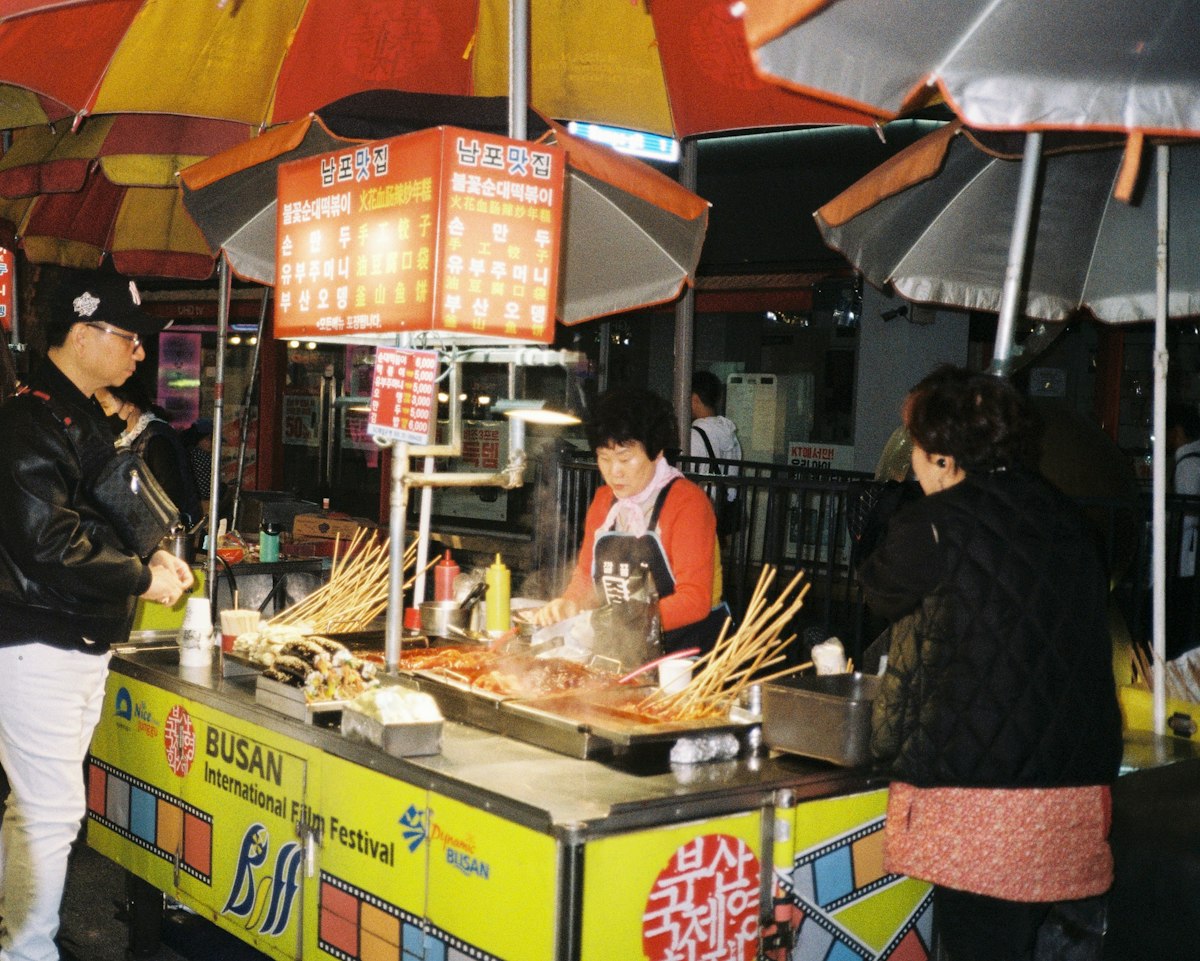
No trip to Busan is complete without sampling its famous street snacks. Ssiat Hotteok is a golden griddled sweet pancake stuffed with brown sugar and sliced sunflower seeds, pumpkin seeds, and pine nuts. Additionally, Busan is world-famous for its Eomuk (fishcakes), which are thick, bouncy, and packed with high-quality fish meat. Stop by specialized shops like Samjin Amook near Busan Station to grab freshly made fishcake skewers or pastry-style fishcake treats for your return train ride.
Pro Tips for Tourists
- Book KTX Tickets Early: Tickets open precisely 30 days prior at midnight Korean Standard Time. Weekend travel times sell out within hours.
- Use T-Money Transit Cards: The same T-Money or Climate Card used in Seoul works seamlessly on Busan’s subway lines and city buses.
- Utilize Coin Lockers at Busan Station: If traveling with heavy day packs or luggage, store them in the digital lockers inside Busan Station before heading out.
- Download KakaoMap or Naver Map: Google Maps does not provide reliable pedestrian or transit navigation in South Korea. Download Naver Map for precise subway and walking routes.
- Take Taxis for Short Distances: Taxi fares in Busan are relatively affordable. If traveling between coastal sites in a group of two to four, taxis save valuable time compared to bus transfers.
Frequently Asked Questions
Is a day trip from Seoul to Busan really worth it?
Yes, a day trip is well worth the effort if you have a tight travel schedule in South Korea. The KTX train gets you to Busan in just 2.5 hours, allowing you to experience Korea’s vibrant coastal scenery, unique street food, and ocean beaches all in one efficient day.
How far in advance should I book my KTX train tickets?
It is strongly advised to book KTX train tickets as soon as they become available, which is 30 days prior to your travel date. Early morning trains out of Seoul and evening return trains from Busan are in high demand, especially on Fridays, Saturdays, and Sundays.
Can I use my Seoul transit card in Busan?
Yes, standard transit cards such as T-Money, Cashbee, and major international tourist transit cards loaded with Korean Won work perfectly across Busan’s public subway system and public buses.