

Stepping into South Korea for the first time is an sensory adventure, and nowhere is that energy more thrilling than in its bustling street food alleys. From sizzling hotteok pancakes on icy winter evenings to smoky grilled skewers served under bright night-market neon, street food is the absolute heart of Korean culinary culture. For foreign travelers, it is not only the most budget-friendly way to eat well, but also an unforgettable cultural gateway into everyday Korean life.
If you are planning your first visit to Seoul, navigating the endless rows of bubbling cauldrons and sizzling grills can feel overwhelming. To help you dive into this delicious world with complete confidence, we have put together the ultimate guide to the best Korean street foods to sample, how much they cost, and exactly where to find them.
- Top Must-Try Dishes: Tteokbokki, Rabokki, Sotteok Sotteok, Hotteok, Odeng, Mayak Gimbap, and Bungeoppang.
- Best Food Destinations in Seoul: Gwangjang Market (traditional food culture), Myeongdong Night Market (trendy international crowd), Tongin Market (traditional coin system), and Hongdae (youthful late-night bites).
- Average Budget: Expect to spend 3,000 to 7,000 KRW ($2.20 to $5.20 USD) per dish.
- Payment Rule: Cash (Korean Won) is still preferred at market stalls, though major tourist hubs like Myeongdong increasingly accept cards or T-Money.
Must-Try Korean Street Foods for Beginners

Korean street food strikes a perfect harmony between spicy, sweet, savory, and chewy textures. Here are the essential dishes every first-timer must taste during their journey.
1. Tteokbokki & Rabokki (Spicy Rice Cakes)
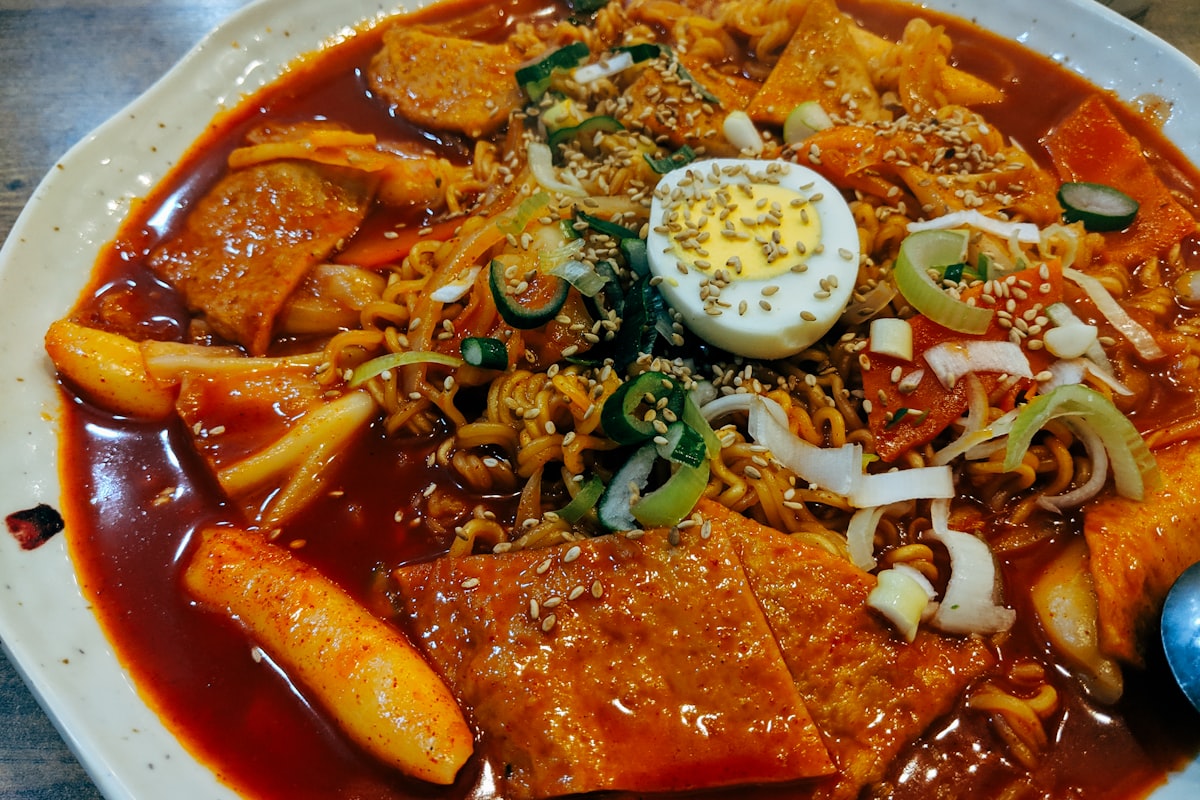
Tteokbokki is undisputed king of Korean street food. Cylindrical, chewy rice cakes are simmered in a rich, sweet, and spicy gochujang (red chili paste) broth, often accompanied by thin fish cakes and hard-boiled eggs. If you want an elevated experience, try Rabokki—a heavenly fusion of tteokbokki combined with instant ramen noodles. The chewy noodles soak up the spicy-sweet red sauce, making it an insanely satisfying meal that showcases why Korean comfort food is world-famous.
2. Sotteok Sotteok (Sausage & Rice Cake Skewers)
A beloved rest-stop delicacy turned urban street hit, Sotteok Sotteok gets its name from alternating pieces of mini sausage (so) and chewy rice cake (tteok) grilled on a wooden skewer. Slathered in a tangy glaze of ketchup, gochujang, honey, and garlic, it delivers a wonderful contrast of textures: crisp skin, juicy meat, and chewy rice cake in every single bite.
3. Hotteok (Sweet Korean Pancakes)
If you have a sweet tooth, Hotteok will instantly become your favorite Korean treat. These pan-fried yeast dough pancakes are filled with a luscious mixture of dark brown sugar, cinnamon, and crushed walnuts or seeds. As the pancake cooks on a hot griddle, the sugar inside melts into a molten, gooey syrup. Be cautious taking your first bite, as the sweet filling inside is served scorching hot!
4. Odeng / Eomuk (Fish Cake Skewers)
Folded fish cake ribbons skewered onto long wooden sticks and simmers continuously in a deep, steaming pot of savory radish and kelp broth. Odeng is cheap, deeply comforting, and non-spicy. The best part? When you buy a skewer, vendors will gladly hand you a paper cup so you can pour yourself unlimited refills of hot, savory broth directly from the vat.
5. Mayak Gimbap (Mini Seaweed Rice Rolls)
Translated literally as “addicting gimbap,” these bite-sized rice rolls are filled with pickled radish, carrots, and spinach wrapped in toasted seaweed brushed with aromatic sesame oil. Served alongside a sharp mustard-soy dipping sauce, these bite-sized rolls are so habit-forming that stopping at just one plate is nearly impossible.
6. Bungeoppang (Fish-Shaped Stuffed Pastry)
A classic winter staple found across Seoul, Bungeoppang is a fish-shaped waffle pastry made using a cast-iron mold. Crisp on the outside and warm on the inside, it is traditionally filled with sweetened red bean paste, though modern stalls also offer smooth custard cream, Nutella, or melted cheese fillings.
Top Street Food Markets & Hotspots in Seoul
While you can find street food stalls near almost every subway station, certain vibrant markets in Seoul offer a concentrated food festival experience that every tourist should explore.
Gwangjang Market (Traditional Culinary Heart)
With over 100 years of history, Gwangjang Market is Seoul’s most famous traditional market. Here, seated on bench cushions warmed by heated coils in winter, you can feast on freshly fried Bindaetteok (mung bean pancakes), Mayak Gimbap, and hand-cut Kalguksu (knife-cut noodle soup). It offers an authentic, energetic glimpse into traditional Korean market life.
Myeongdong Street Food Night Market
Transforming into a giant outdoor food avenue every afternoon, Myeongdong is tailored for international tourists. Here you will find theatrical, visually impressive creations alongside classics: lobster with melted cheese, giant fried chicken skewers, grilled cheese skewers, egg bread (Gyeran-ppang), and twisted tornado potatoes.
Tongin Market (Doshirak Cafe Experience)
Located west of Gyeongbokgung Palace, Tongin Market offers a unique interactive lunch. You exchange physical cash for a string of traditional brass coins (Yeoppeon) and a lunchbox tray. Walk along the alleyway, spending coins to pick up mini-portions of oil tteokbokki, dumplings, and side dishes from various participating stalls.
Korean Street Food At a Glance
Use this quick reference breakdown when planning your street snack itinerary and managing your dining budget during your travels.
| Dish Name | Flavor Profile | Average Price (KRW) | Best Place to Try |
|---|---|---|---|
| Tteokbokki / Rabokki | Spicy, Sweet, Chewy | 4,000 – 6,000 | Gwangjang Market, Sindang-dong |
| Sotteok Sotteok | Savory, Sweet-Spicy Glaze | 3,500 – 4,500 | Myeongdong, Highway Rest Stops |
| Hotteok | Sweet, Nutty, Cinnamon Syrup | 2,000 – 3,000 | Insadong, Namdaemun Market |
| Odeng (Fish Cake) | Savory, Mild, Umami Broth | 1,500 – 2,000 per skewer | Subway station vendors, Hongdae |
| Bungeoppang | Sweet, Warm Custard / Red Bean | 2,000 for 3 pieces | Neighborhood street carts across Seoul |
Pro Tips for Tourists
- Always Carry Physical Cash: While physical stores in South Korea are virtually 100% cashless, traditional street food vendors heavily rely on cash. Keep bills of 1,000 KRW, 5,000 KRW, and 10,000 KRW handy.
- Stand Near the Stall to Eat: In Korea, walking down the street while eating is generally frowned upon. Stand near the food stall or bench area to enjoy your snack, then return wooden skewers and paper cups directly to the vendor for disposal.
- Master Useful Phrases: Saying “I-geo ju-se-yo” (Please give me this one) while pointing makes ordering effortless. Express your gratitude after eating by saying “Gam-sa-ham-ni-da” (Thank you).
- Free Fish Cake Broth: If you order tteokbokki or skewers, feel free to pick up a paper cup and scoop yourself broth from the odeng station. It is customary and completely free!
- Check for Spice Levels: If you cannot tolerate spicy food, look for non-spicy options like Gyeran-ppang (egg bread), Odeng, or Hotteok. You can ask vendors “Mae-wo-yo?” (Is it spicy?).
Frequently Asked Questions
Is Korean street food safe for tourists to eat?
Yes, Korean street food is extremely safe and hygienic. Food stall turnover is very high in busy districts like Seoul, meaning ingredients are fresh and cooked right in front of you. Health standards in South Korea are exceptionally high.
How much cash should I bring for street food in Seoul?
Budgeting around 15,000 to 20,000 KRW ($11 to $15 USD) per person is plenty for a full night of street food tasting, covering 3 to 4 snacks and drinks.
Are there vegetarian options available in Korean night markets?
While many savory snacks contain hidden meat, fish, or anchovy broth, there are several vegetarian options available. Hotteok, Bungeoppang, Mayak Gimbap (verify no ham), Bindaetteok (mung bean pancake), and Gyeran-ppang (egg bread) are great choices.