
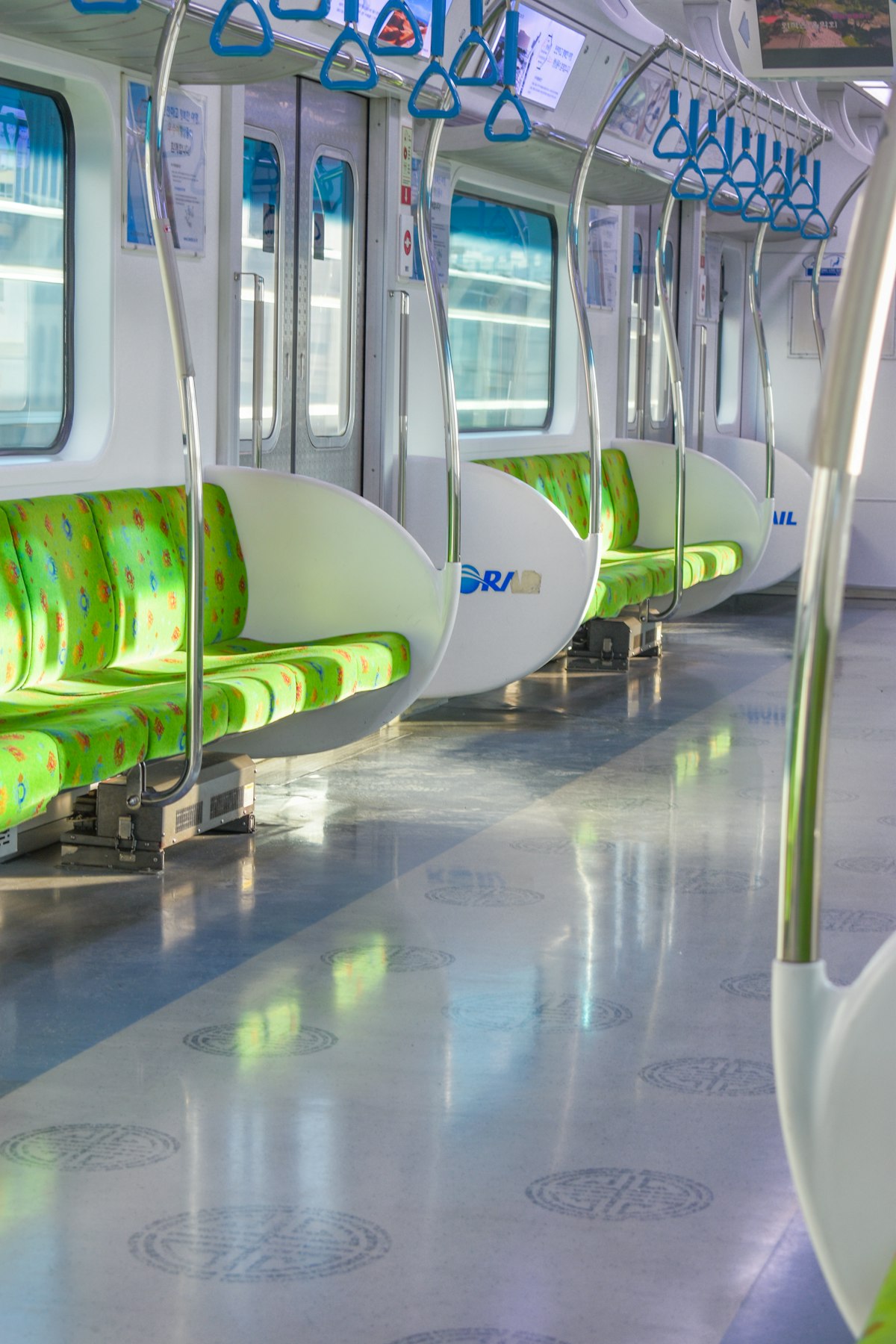

Navigating payment methods in South Korea can feel surprisingly complex for foreign tourists. On one hand, South Korea is virtually a cashless society where almost every boutique, cafe, and restaurant happily accepts plastic. On the other hand, public transportation networks and traditional markets follow a completely different set of rules. Travelers arriving in Seoul often find themselves standing at airport railway gates asking a fundamental question: Should I rely on my home country credit card, or do I need to buy a local T-Money card?
Choosing the wrong payment method during your trip can quickly lead to unexpected foreign exchange markups, declined card fees, and lost transfer discounts on subways and city buses. Understanding how T-Money transit cards compare against international credit cards will help you streamline your daily travel routine while keeping your budget intact.
- T-Money is essential for public transit: Foreign credit cards cannot be tapped directly at Korean subway turnstiles or city bus gates.
- Credit cards dominate retail and dining: Visa and Mastercard are accepted almost everywhere for sit-down meals, hotel stays, and major shopping outlets.
- T-Money requires cash reloads: You must use physical Korean Won (KRW) cash to top up your T-Money card at machines or convenience stores.
- Watch out for hidden fees: Foreign credit cards incur 1% to 3% foreign transaction fees unless you use a no-FX-fee card, whereas T-Money locks in exact KRW rates upon cash reload.
- The winning strategy: Combine both by using T-Money exclusively for transit and micro-payments, while keeping a zero-FX credit card for larger expenses.
Understanding the T-Money Card: Features and Advantages

A T-Money card is South Korea’s standard stored-value smart card used primarily for public transportation. Available at convenience stores like GS25, CU, Seven-Eleven, and airport train stations, the empty card typically costs between 2,500 KRW and 5,000 KRW ($2.00 to $4.00 USD). Once purchased, you load physical Korean Won cash onto the card at station kiosks or store registers before tapping it to travel.
The biggest advantage of T-Money is its integration across the entire national transit infrastructure. When tapping a T-Money card on subways and buses across Seoul, Busan, and major provinces, you automatically receive discounted fare rates compared to buying single-use paper tokens or paying single bus fares in cash. More importantly, T-Money activates Korea’s seamless transfer system: as long as you tap off when exiting, you receive free or heavily discounted transfers between subway lines and city buses within a 30-minute window.
Beyond subways and buses, T-Money is widely accepted for micro-purchases. You can tap your card to pay for goods at convenience stores, vending machines, lockers, fast-food chains, and even for metered rides in city taxis. Because the card operates on stored cash value, every purchase avoids credit card foreign conversion markups entirely.
Using Foreign Credit Cards in South Korea: Convenience and Pitfalls
South Korea boasts one of the world’s highest credit card acceptance rates. International cards operating on the Visa and Mastercard networks are universally accepted at department stores, fashion boutiques, cafes, sit-down restaurants, and hotels throughout the country. American Express is also widely accepted at upscale establishments and major tourist hubs, though small mom-and-pop shops occasionally reject it due to higher processing fees.
However, foreign credit cards come with a major catch when it comes to transportation: they do not work at transit turnstiles. Korean subway gates and bus readers rely on local RFID chip standards linked directly to domestic card issuers. Even if your foreign credit card features contactless payWave or Apple Pay, tapping it at a Seoul metro gate will trigger an error screen.
Another critical consideration is foreign exchange pricing. Every time you swipe an international credit card in Korea, your foreign bank may charge a foreign transaction fee ranging from 1% to 3%. Furthermore, card readers in tourist areas sometimes prompt Dynamic Currency Conversion (DCC), offering to charge your card in your home currency rather than Korean Won. Accepting DCC results in unfavorable conversion rates that can quietly inflate your total bill by 5% to 10%.
T-Money vs. Credit Card: Side-by-Side Comparison
To help you evaluate which payment channel fits each situation during your Korean itinerary, review the functional differences detailed in the comparison table below.
| Feature / Scenario | T-Money Card | Foreign Credit Card |
|---|---|---|
| Subway & Bus Transit | Fully supported; unlocks automatic transfer discounts. | Not supported at subway turnstiles or bus gates. |
| Restaurants & Malls | Limited support; mostly convenience stores and select chains. | Universally accepted across virtually all merchants. |
| Funding Method | Requires physical Korean Won (KRW) cash to reload. | Billed directly to your home bank line in foreign currency. |
| Transaction Fees | Zero FX fees after initial cash exchange / ATM withdrawal. | 0% to 3% bank fee + potential DCC conversion markup. |
| Refundability | Unused cash refunded at convenience stores (500 KRW fee). | Standard refund rules back to the original card account. |
Which Payment Method Saves Tourists More Money?
When assessing pure cost efficiency, neither payment option completely eliminates the need for the other. Instead, financial savings depend entirely on how you assign tasks to each card during your travel schedule.
Where T-Money Saves You Cash
The modest 3,000 KRW cost of a T-Money card easily pays for itself within two days of exploration. Each subway ride with a T-Money card saves 100 KRW over cash single-trip tickets, but the real savings come from transfer benefits. If you ride the metro, exit to explore a neighborhood, and take a city bus within 30 minutes, T-Money calculates the journey as a single continuous trip. Paying cash or purchasing individual ride tickets for each leg would cost double.
Furthermore, using T-Money for small purchases—like buying bottled water, iced coffee, or snacks at GS25—saves money by preventing multiple micro-transaction conversions on foreign credit cards that levy minimum transaction fees.
Where Credit Cards Save You Cash
For large transactions—such as hotel reservations, luxury shopping in Gangnam, or dining at fine restaurants—paying with a credit card that offers zero foreign transaction fees is vastly superior. Loading hundreds of thousands of Won into cash just to load T-Money exposes you to unnecessary currency exchange commissions at airport booths. High-value credit card purchases also allow you to collect travel rewards, cashback, and protection coverage while taking advantage of tax refund counters at major retail locations.
Pro Tips for Tourists
- Withdraw cash at global ATMs: Withdraw KRW cash using an ATM marked with a “Global” logo to load your T-Money card, as subway reload machines only accept physical paper currency.
- Always tap out when exiting transit: Ensure you tap your T-Money card on the exit sensor when stepping off buses or leaving subway gates; failing to tap out forfeits transfer discounts and applies a maximum distance surcharge.
- Always choose local currency (KRW): When paying with a credit card at payment terminals, always select Korean Won if prompted between KRW and your home currency to avoid dynamic conversion penalties.
- Consider hybrid tourist cards: Look into specialized pre-paid tourist cards such as WOWPASS or NAMANE, which combine T-Money transit functions with a pre-paid credit card engine reloadable via foreign currency apps.
- Reclaim remaining cash balance: Before heading to the airport at the end of your trip, visit any major convenience store to refund your remaining T-Money cash balance (up to 20,000 KRW) for a small 500 KRW service fee.
Frequently Asked Questions
Can I use Apple Pay or Google Pay on Korean subways with a foreign card?
No. Although Apple Pay has officially launched in South Korea for select domestic cardholders and retail merchants like Hyundai Department Store and 7-Eleven, foreign-issued cards on mobile wallets are not accepted at subway or bus turnstiles. You must tap a physical T-Money or local transit card to use public transport.
How much cash should I initially load onto my T-Money card?
For a typical 3 to 5-day sightseeing trip in Seoul, loading 15,000 KRW to 20,000 KRW (roughly $11 to $15 USD) per person is sufficient for transit. You can easily top up additional cash in increments as low as 1,000 KRW at any subway station or convenience store whenever your balance runs low.
Do taxis in Korea accept international credit cards?
Yes. Almost all official city taxis in Seoul and major South Korean urban centers accept foreign Visa and Mastercard cards, as well as T-Money cards. However, having a loaded T-Money card or small cash reserve is recommended when traveling in rural regions where taxi terminals may experience network connectivity issues.