

Seoul is a captivating metropolis where 600-year-old palaces stand in the shadow of futuristic, neon-lit skyscrapers. For first-time visitors, the sheer scale of South Korea’s capital can feel overwhelming. With only 48 hours to spare, you might wonder if it is truly possible to experience the essence of this dynamic city. The answer is a resounding yes. By focusing on a well-planned, geographically sensible route, you can immerse yourself in Seoul’s rich history, indulge in mouthwatering street food, and witness its dazzling modern skyline without feeling rushed.
This realistic weekend itinerary is designed specifically for first-timers. It balances historic landmarks with modern hotspots, maximizing your time while minimizing unnecessary transit. Get ready to discover the best of Seoul in one incredible weekend.
- Day 1 (Traditional): Gyeongbokgung Palace, Bukchon Hanok Village, Insadong traditional tea houses, and sunset at N Seoul Tower.
- Day 2 (Modern): Youth culture in Hongdae, futuristic architecture at Starfield Library in Gangnam, and a relaxing evening at Banpo Hangang Park.
- Essential Apps: Download Naver Map or KakaoMap before arrival, as Google Maps does not provide accurate walking directions in Korea.
- Transit Tip: Purchase a T-money card at any convenience store for seamless subway and bus transfers.
Day 1: Traditional Seoul & Epic Views

Your first day in Seoul focuses on the historic heart of the city, located north of the Han River (known as Gangbuk). This area is home to the city’s most iconic historical landmarks, traditional architecture, and cultural markets.
Morning: Gyeongbokgung Palace & Hanbok Rental
Start your morning at Gyeongbokgung Palace, the largest and most grand of the Five Grand Palaces built during the Joseon Dynasty. To make this experience truly unforgettable, rent a Hanbok (traditional Korean clothing) from one of the many rental shops near the palace gates. Not only does wearing a Hanbok make for spectacular photos against the wooden pavilions and stone courtyards, but it also grants you free admission to the palace grounds.
Aim to arrive by 9:30 AM to secure your rental and head to the main gate, Gwanghwamun, to watch the Royal Guard Changing Ceremony, which takes place daily at 10:00 AM. Spend about two hours exploring the sprawling grounds, making sure to visit the picturesque Gyeonghoeru Pavilion resting over a peaceful lotus pond.
Midday: Bukchon Hanok Village & Insadong
After returning your Hanbok, take a short 15-minute walk east to Bukchon Hanok Village. This historic neighborhood is home to hundreds of traditional Korean houses, called hanok, dating back to the Joseon Dynasty. Today, many of these beautiful structures operate as cultural centers, guesthouses, and quiet cafes. As you wander the narrow, hilly alleys, remember to keep your voice down, as this is still a residential neighborhood.
Next, head south into Insadong, a lively neighborhood famous for its traditional wooden tea houses, calligraphy shops, and artisan galleries. It is the perfect place to stop for lunch. Try a steaming bowl of handmade mandu (Korean dumplings) or a healthy spread of temple food. Afterward, duck into a hidden alleyway to find a traditional tea house and enjoy hot omija (five-flavor berry) tea paired with sweet rice cakes.
Evening: Sunset at N Seoul Tower
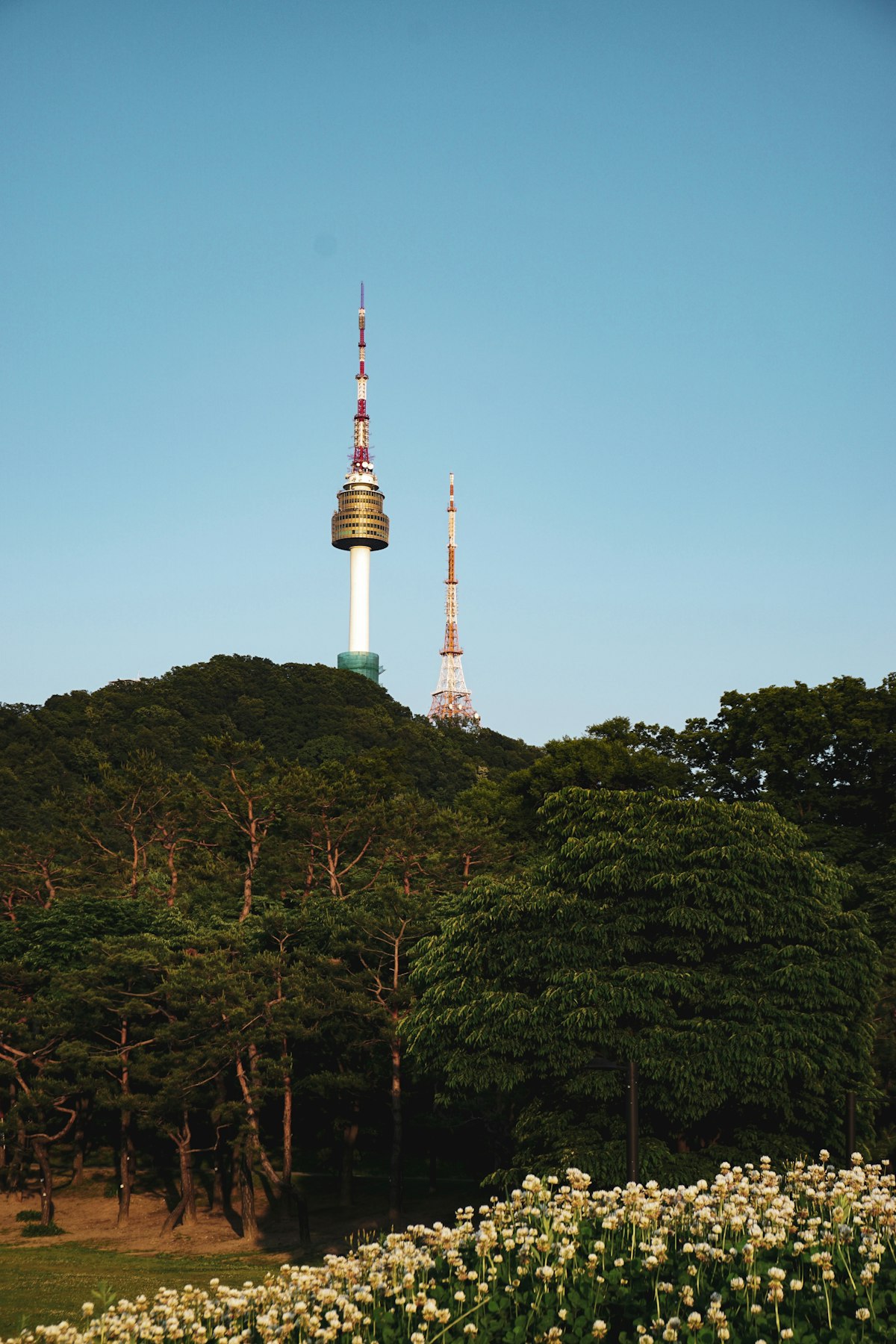
As the afternoon fades, take the subway to Myeongdong Station and head toward the Namsan Cable Car. The cable car will whisk you up the forested slopes of Namsan Mountain to the base of N Seoul Tower, one of the city’s most recognizable landmarks.
At the top, you can purchase a ticket to the observation deck for a breathtaking 360-degree view of Seoul. Watch the sun drop below the horizon as the city lights begin to sparkle. Before heading back down, stop by the roof terrace to see the thousands of colorful “love locks” attached to the fences by couples from all over the world.
Day 2: Modern Culture, Shopping & River Breezes
Your second day takes you to the modern, energetic side of Seoul, highlighting the city’s youth culture, high-tech developments, and scenic riverfront parks.
Morning: Youth Culture and Cafes in Hongdae
Begin your morning in Hongdae, the vibrant district surrounding Hongik University. Known as the epicenter of Seoul’s indie music, arts, and youth culture, Hongdae is quiet in the morning, making it the ideal time to explore without the massive crowds. Walk down the colorful shopping streets, admire the creative street art, and stop by a trendy, themed cafe for breakfast. From minimalist espresso bars to quirky animal cafes, Hongdae has some of the most unique coffee shops in the world.
Afternoon: Gangnam & Starfield Library
From Hongdae, hop on Subway Line 2 and head south across the river to Gangnam, Seoul’s sleek, upscale commercial hub. Head straight to the COEX Mall, a massive underground shopping center. At the heart of the mall lies the Starfield Library, a stunning public space featuring towering, 13-meter-tall bookshelves filled with thousands of books and magazines. The natural light filtering through the glass ceiling makes it an architectural marvel and an absolute must-visit for photos.
After exploring the library, step outside to the East Plaza of COEX to find the giant bronze monument dedicated to the global hit song “Gangnam Style.” Strike a pose beneath the giant crossed hands for a fun travel memory.
Evening: Picnic at Banpo Hangang Park
End your weekend in Seoul like a local by heading to Banpo Hangang Park. The Han River is the lifeblood of Seoul, and its parks are the ultimate evening hangout spots. Grab some takeout food, or do what locals do: use an on-site convenience store cooking machine to make instant ramen, or order Han River delivery chicken and beer (known as “chimaek”).
If you are visiting between April and October, secure a spot near the Banpo Bridge to watch the Moonlight Rainbow Fountain show. This spectacular show features water jets illuminated by rainbow lights dancing in sync with music, casting a magical glow over the river. It is the perfect, relaxing conclusion to a fast-paced weekend.
Comparing Seoul’s Top Neighborhoods for First-Timers
To help you decide where to spend your limited time or where to base yourself during your stay, here is a quick breakdown of Seoul’s key tourist districts:
| Neighborhood | Main Vibe | Best For | Nearest Subway Station |
|---|---|---|---|
| Insadong | Traditional & Cultural | Souvenirs, tea houses, and art galleries | Anguk Station (Line 3) |
| Myeongdong | Bustling & Commercial | Cosmetics shopping and diverse street food | Myeongdong Station (Line 4) |
| Hongdae | Youthful & Creative | Nightlife, indie cafes, and street busking | Hongik Univ. Station (Line 2) |
| Gangnam | Sleek & Futuristic | High-end shopping, modern architecture, and libraries | Samseong Station (Line 2) |
Pro Tips for Tourists
- Avoid Google Maps: Due to local security regulations, Google Maps does not work properly for walking directions in South Korea. Download Naver Map or KakaoMap instead.
- Get a T-money Card Immediately: You can purchase this reusable transit card at any convenience store (like CU, GS25, or 7-Eleven) at the airport or in the city. Load it with cash to pay for subways, buses, and even taxi rides.
- Carry Some Physical Cash: While South Korea is highly digitalized and card-friendly, small street food vendors and Hanbok rental lockers often require physical cash. Keep around 20,000 to 30,000 KRW in cash on you at all times.
- Stay Connected: Rent a pocket Wi-Fi device or purchase an eSIM before arriving in Korea to ensure you have instant, high-speed internet access for navigation and translation apps.
Frequently Asked Questions
Is 48 hours enough to see Seoul?
While you cannot see everything in two days, 48 hours is absolutely enough time to experience Seoul’s main highlights. By grouping your sightseeing geographically (exploring the north side on Day 1 and the south side on Day 2), you can experience a rich mix of history, shopping, food, and modern culture without feeling rushed.
What is the best way to get around Seoul?
The Seoul Metropolitan Subway is fast, incredibly clean, affordable, and fully translated into English. It is by far the best way to travel around the city. Taxis are also readily available and relatively cheap compared to other major global cities, but traffic can be heavy during rush hours.
How do I get from Incheon International Airport to downtown Seoul?
The fastest and most reliable option is the Airport Railroad Express (AREX) train. The Non-stop Express Train takes you directly from Incheon Airport to Seoul Station in about 43 minutes. Alternatively, you can take the All-Stop Train, which takes about an hour but is slightly cheaper and stops at major transit stations along the way.