

Having lived in Seoul for five years now, I have seen my fair share of travel regulations come and go. I still vividly remember late 2021 when my sister tried visiting me from London. She was nearly turned away at the Heathrow Airport departure gate because she hadn’t filled out the then-brand-new K-ETA (Korea Electronic Travel Authorization). Fast forward to early 2023, when South Korea launched its “Visit Korea Year” campaign and temporarily suspended the K-ETA requirement for 22 visa-exempt countries. The massive news that every traveler should celebrate? The South Korean government has officially extended this exemption all the way through December 31, 2026!
If you are planning a trip from the United States, United Kingdom, Canada, Australia, or most EU nations, this extension is a major win. It cuts down on bureaucratic paperwork, saves you a bit of cash, and makes landing at Incheon International Airport smoother than ever. However, after watching dozens of visiting friends navigate immigration here over the years, I know that official policy announcements often leave room for confusion. Do you still need to fill out paper arrival cards? What about the Q-Code health form? Can you voluntarily apply for a K-ETA anyway to save time? Here is my complete, unfiltered guide on everything you need to know about navigating South Korea’s extended K-ETA waiver like an insider.
- Exemption Extended: Citizens of 22 eligible countries (including the US, UK, Canada, Australia, and EU member states) do not need a K-ETA through December 31, 2026.
- Paper Arrival Cards: If you do not have a K-ETA, you must fill out a physical yellow Arrival Card upon landing or during your flight.
- Optional K-ETA: You can still voluntarily apply online for 10,000 KRW (~$7.50 USD) if you want to skip writing out physical paper forms at border control.
- Existing Authorizations: Approved K-ETAs remain valid until their original expiration date, regardless of the exemption.
- Arrival Procedures: Q-Code requirements are lifted for standard origins, and customs procedures are heavily automated for standard tourists.
What Is the K-ETA Exemption Extended to 2026?

When Korea introduced the K-ETA in September 2021, it required travelers from visa-free countries to apply online at least 72 hours before departure, pay a 10,000 KRW application fee, and submit accommodation details. In April 2023, as part of an initiative to revitalize international travel, the Ministry of Justice temporarily waived this requirement for 22 designated countries. That temporary relief was scheduled to expire, but immigration authorities officially pushed the deadline to December 31, 2026.
This means if you hold a passport from eligible regions—such as the United States, United Kingdom, Canada, Australia, New Zealand, Japan, Germany, France, Italy, Spain, or the Netherlands—you can simply book your flight, board the plane, and land in Korea without applying for prior electronic authorization. It completely eliminates the stress of waiting for an online approval code hours before your departure flight.
However, “no K-ETA” does not mean zero entry paperwork. The crucial detail that catches tourists off guard is the physical arrival card process. If you enter Korea without an active K-ETA, cabin crew will hand you a paper physical Arrival Card (a small yellow card) during your flight. You must fill this out by hand with your passport details, local Korean accommodation address, and local phone number before presenting it to border control officers at Incheon or Gimpo airport.
Eligible Countries vs. K-ETA Requirements Breakdown
To eliminate any guesswork before you pack your bags, here is how entry rules currently stack up across different passport categories during the 2024–2026 waiver period:
| Passport Region / Country | K-ETA Status | Paper Arrival Card Needed? | Fee |
|---|---|---|---|
| Exempt Group (22 Countries) USA, UK, Canada, Australia, NZ, Germany, France, Italy, Spain, Japan, Singapore, etc. |
Exempt until Dec 31, 2026 (Optional application allowed) | Yes (Unless you voluntarily apply for K-ETA) | Free (or 10,000 KRW for optional K-ETA) |
| Other Visa-Waived Countries Thailand, Malaysia, Brazil, Mexico, UAE, South Africa, etc. |
Mandatory (Must apply 72h prior online) | No (Exempt when holding valid K-ETA) | 10,000 KRW (~$7.50 USD) |
| Visa-Required Countries China, India, Philippines, Vietnam, etc. |
Not Applicable (Must secure consular visa) | Yes | Varies by consular visa type |
Why You Might Want to Apply for K-ETA Anyway
Here is an insider travel secret that most basic guides fail to mention: even if your country is exempt, you are still permitted to voluntarily apply for a K-ETA online before traveling. Why on earth would you pay 10,000 KRW (~$7.50 USD) when you don’t legally have to? For me, it comes down to speed and sheer convenience upon landing.
When you hold an approved K-ETA linked electronically to your passport, you are completely exempt from writing out physical paper arrival cards. You will not need to scramble in a dark aircraft cabin searching for a pen, nor will you need to stand around crowded writing desks in the immigration hall. You walk straight into the immigration line, scan your passport, submit your fingerprints and photo, and step into Korea.
Last autumn, two sets of my friends visited me in Seoul during the same week. Mark decided to save the 10,000 KRW and filled out his paper card upon arrival. Sarah paid for the optional K-ETA online two days before her flight. Sarah cleared immigration at Terminal 2 in under 12 minutes, collected her luggage, and was already enjoying an iced Americano from a airport convenience store while Mark spent an extra 35 minutes delayed because he had forgotten to write down his hotel’s full street postal code on his yellow paper slip. If saving half an hour of airport hassle after a long-haul flight is worth seven dollars to you, applying voluntarily is a very smart move.
Navigating Arrival, Transit, and Common Local Blunders
Once you clear border control, your real Seoul experience begins. Having spent five years helping visiting family and foreign friends adjust to life on the ground, let me save you from three classic tourist mistakes that trip up almost every newcomer.
1. The Transport Card Cash Trap
South Korea is nearly 100% cashless for dining, shopping, and everyday purchases—except for public transit! To ride the Seoul subway and public buses, you need a physical transit card like a T-money or WOWPASS card. You can purchase a T-money card at any convenience store inside Incheon Airport for around 3,000 to 5,000 KRW ($2.20–$3.70 USD). However, you MUST top up the card using physical Korean cash (KRW). Ticket machines and convenience store card rechargers do not accept foreign credit cards.
I learned this lesson the hard way during my second month in Seoul. I tapped into the subway station at Hongdae, realized my T-money balance was zero, and couldn’t pass through the turnstile. The turnstile gate locked with an alarming red flash, leaving me stranded while rush-hour commuters swarmed around me! Avoid the embarrassment: withdraw at least 50,000 KRW (~$37 USD) at an airport ATM as soon as you land specifically for transport recharges.
2. Ditch Google Maps for Local Apps
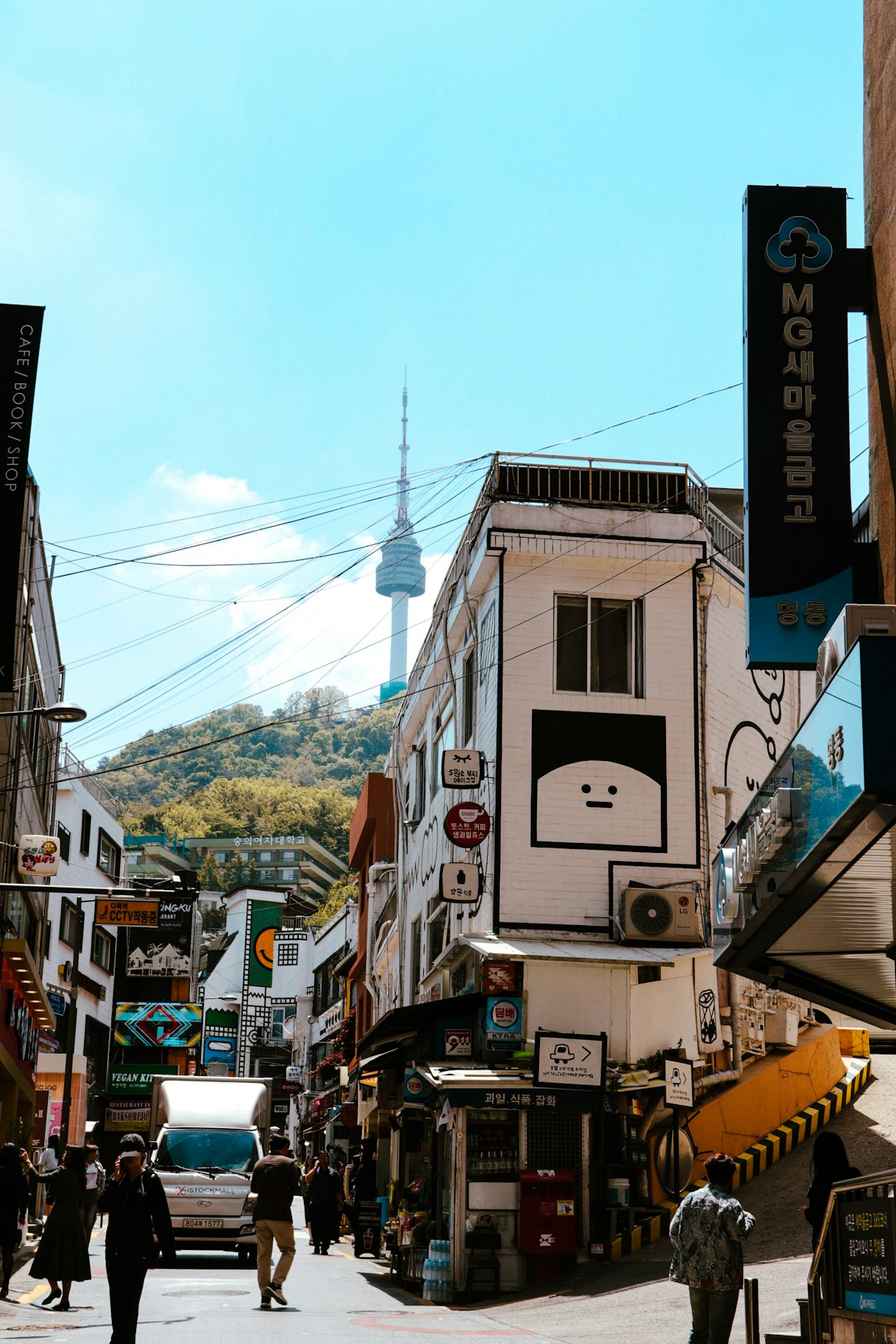
Google Maps does not function properly for walking directions or transit routes in Korea due to national security map vector laws. Save yourself endless frustration by downloading Naver Map or KakaoMap before flying. Set the app language to English. Naver Map will tell you exactly which subway car door puts you closest to your exit and provides turn-by-turn walking routes. Whether you are walking down a quiet Seoul side street in daylight with N Seoul Tower rising behind the rooftops or exploring narrow dining alleys in Insadong, local navigation apps are non-negotiable essentials.
3. Experiencing Sightseeing Highlights Effortlessly
With border hassle minimized through 2026, you can focus on enjoying Korea’s amazing cultural heritage. One of my favorite weekend rituals is visiting historical districts in central Seoul. Seeing visitors in hanbok in front of Gyeongbokgung Palace with Bugaksan behind never fails to inspire awe. Here is a insider budget secret: if you rent and wear traditional Korean hanbok attire (which costs roughly 15,000 to 25,000 KRW / $11–$18 USD from rental shops surrounding palace grounds), admission to all four major royal palaces in Seoul is 100% free!
Pro Tips for Tourists
- Save your accommodation address in Hangeul: Store your Korean hotel address written in Korean characters on your phone offline. Taxi drivers and paper arrival forms require accurate local details.
- Take the AREX Express Train: From Incheon Airport to Seoul Station, the AREX non-stop express train costs 11,000 KRW (~$8.00 USD) and takes only 43 minutes with guaranteed seat reservations and fast onboard Wi-Fi.
- Use Kakao T for Taxi Rides: While Uber operates in Seoul under the name ‘UT’, Kakao T is far more popular. Choose the ‘Pay to Driver’ option in the app to pay your taxi fare directly using cash or international credit card.
- Set Up an eSIM Before Flying: Skip carrying bulky portable Wi-Fi routers. Order an unlimited data eSIM from major Korean carriers (SKT, KT, or LG U+) online before landing (approx. 25,000 KRW / $18 USD for 5 days).
- Carry a Pen in Your Day Pack: Flight attendants frequently run out of pens when distributing yellow paper arrival cards on long-haul flights.
- Take Advantage of Instant Duty-Free Shopping: Bring your physical passport while shopping! Major retail chains like Olive Young and department stores offer immediate tax refunds at checkout for purchases exceeding 15,000 KRW.
Frequently Asked Questions
Do I need to reapply for a K-ETA if I already hold an approved active one?
No. If you previously applied and received an approved K-ETA, it remains fully valid until its original expiration date (typically three years from approval). You can continue entering Korea with your active authorization without filling out paper arrival cards.
Is the Q-Code health declaration form still mandatory for arriving tourists?
No, the mandatory Q-Code system has been discontinued for travelers departing from standard non-quarantine origins like the US, UK, Canada, Australia, and EU countries. You only need to complete health forms if you have recently visited specific designated high-risk health zones.
What happens if I forget to fill out the yellow arrival card before reaching immigration?
If you arrive without an active K-ETA and forget to fill out the paper card during your flight, border officers will direct you to the side writing desks in the arrival hall. You will have to complete the form by hand and re-enter the main queue, adding 20 to 40 minutes to your total wait time during peak arrival hours.