
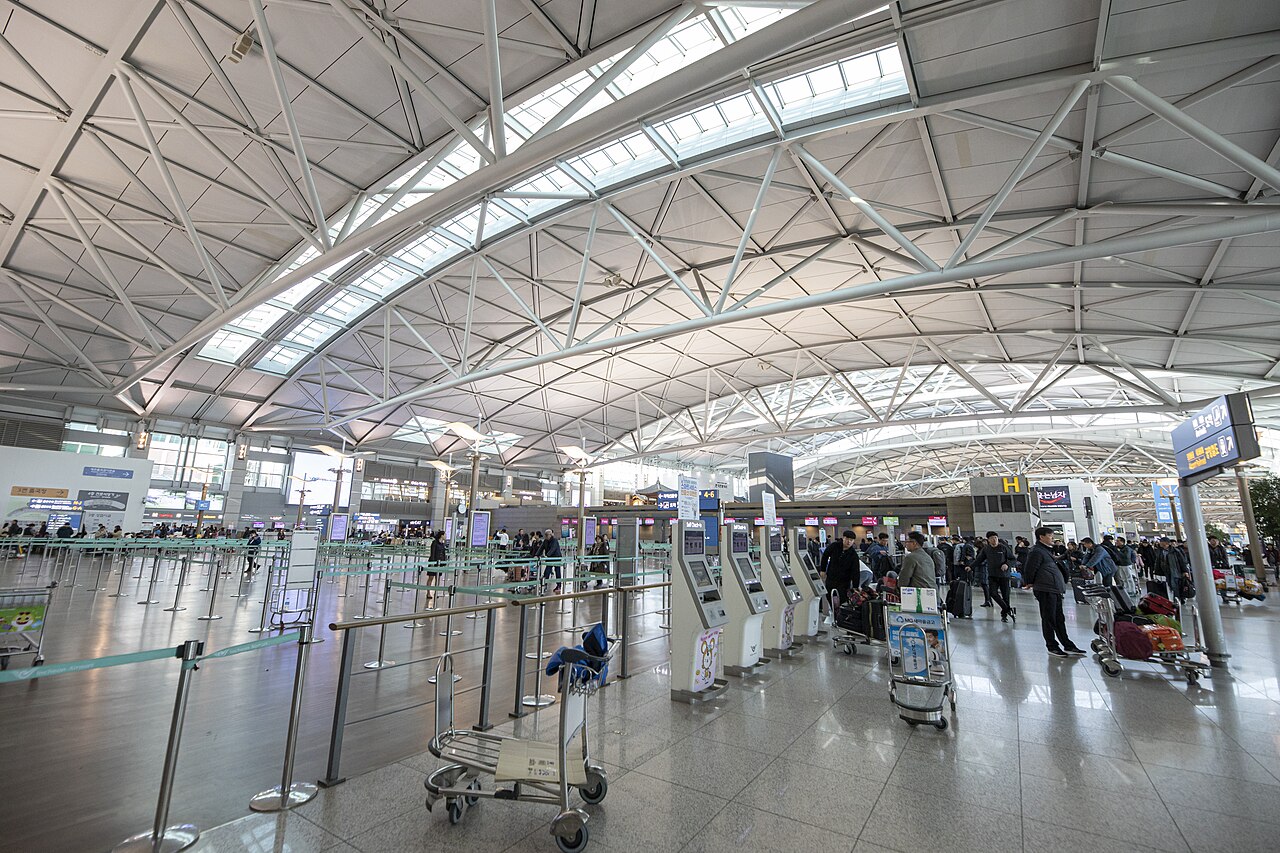

When planning a trip to Seoul, one of the first logistical decisions you will face is booking your flights into the right hub. The Seoul Capital Area is serviced by two major gateways: Incheon International Airport (ICN) and Gimpo International Airport (GMP). While both connect travelers to the vibrant South Korean capital, they cater to very different types of itineraries, travel styles, and regional routes.
Choosing the wrong airport can mean spending extra hours stuck in transit or burning through your travel budget on long taxi fares. Conversely, picking the optimal terminal can have you settling into your hotel in Hongdae or Myeongdong before other passengers have even cleared immigration. Here is our complete, ground-tested comparison to help you choose the best airport for your Korean getaway.
- Fly into Incheon (ICN) if: You are arriving on a long-haul flight from the Americas, Europe, Oceania, or Southeast Asia, or if you want duty-free luxury shopping and world-class transit amenities.
- Fly into Gimpo (GMP) if: You are arriving on short-haul flights from regional hubs (Tokyo Haneda, Osaka Kansai, Taipei Songshan, Shanghai Hongqiao, Beijing) or planning immediate domestic connections to Jeju or Busan.
- Distance advantage: Gimpo sits directly inside the city perimeter (about 15 km from central Seoul), while Incheon is located roughly 50 km west on Yeongjong Island.
- Transit speed: Reaching downtown Seoul takes 20 to 35 minutes from Gimpo, compared to 45 to 70 minutes from Incheon.
Location and Distance: The Proximity Advantage

The most stark contrast between Gimpo and Incheon is geographic. Gimpo International Airport is nestled on the western edge of Seoul proper, effectively functioning as an urban airport similar to Tokyo’s Haneda or Taipei’s Songshan. If your destination is western Seoul neighborhoods like Hongdae, Sinchon, or Yeouido, you can reach your hotel door within 20 to 30 minutes after stepping out of the terminal.
Incheon International Airport, on the other hand, is built on reclaimed land off the coast of Incheon city, approximately 49 to 60 kilometers west of downtown Seoul depending on your route. Even with Korea’s lightning-fast express train infrastructure, traveling between Incheon and central hubs like Myeongdong, Dongdaemun, or Gangnam requires at least 50 to 80 minutes of door-to-door transit time.
Flight Availability: Where Are You Coming From?
For the vast majority of long-haul international visitors, the decision is made automatically by airline scheduling. Incheon handles nearly all intercontinental traffic. If you are flying direct from North America, Europe, Australia, or the Middle East on carriers such as Korean Air, Asiana, Delta, United, or Lufthansa, you will land at Incheon Airport.
Gimpo primarily operates as South Korea’s premier domestic aviation hub, handling thousands of daily travelers heading to Jeju Island, Busan (Gimhae), and Yeosu. However, Gimpo also features a specialized international terminal running high-frequency “city shuttle” routes connecting directly with downtown business airports across East Asia: Tokyo Haneda (HND), Osaka Kansai (KIX), Taipei Songshan (TSA), Shanghai Hongqiao (SHA), and Beijing Capital (PEK). If your journey originates in or transits through one of these regional hubs, booking into Gimpo gives you a far more streamlined arrival experience.
Head-to-Head Comparison: Incheon vs. Gimpo
| Feature | Incheon International Airport (ICN) | Gimpo International Airport (GMP) |
|---|---|---|
| Primary Role | Global international mega-hub (long-haul & regional budget carriers) | Domestic network hub & East Asian regional business corridors |
| Distance to Central Seoul | Approx. 50–60 km (31–37 miles) | Approx. 15–18 km (9–11 miles) |
| Train to Seoul Station | AREX Express: 43–51 mins; AREX All-Stop: 59–66 mins | AREX All-Stop: 22 mins; Subway Line 5 & 9 connections |
| Typical Taxi Fare | ₩65,000–₩90,000+ (plus expressway tolls) | ₩25,000–₩40,000 (standard metered taxi) |
| Airport Facilities | Sprawling mega-terminals, capsule hotels, showers, mega duty-free | Compact terminals, standard dining, Lotte Mall connected underground |
| Immigration Wait Times | 20–60+ mins depending on peak arrival waves | Generally 10–25 mins due to smaller passenger volumes |
Transportation Options to Downtown Seoul
Getting Into Seoul from Incheon (ICN)
From Incheon, your most efficient transit option is the AREX (Airport Railroad Express). The non-stop AREX Express train runs directly between Incheon Terminal 1 or Terminal 2 and Seoul Station in roughly 43 to 51 minutes. Alternatively, the AREX All-Stop train stops at 14 stations along the way, terminating at Seoul Station in just over an hour while costing half the price.
If you are traveling with bulky luggage or staying at a major international hotel in Gangnam, Myeongdong, or Dongdaemun, the K-Limousine and premium airport limousine buses provide comfortable, transfer-free curbside drop-offs, though they can be delayed by rush-hour expressway traffic.
Getting Into Seoul from Gimpo (GMP)
Gimpo shines brightest when it comes to urban connectivity. Gimpo Airport Station serves as a central interchange for five distinct train lines: the AREX All-Stop train, Seoul Subway Line 5 (purple), Seoul Subway Line 9 (gold), the Seohae Line, and the Gimpo Goldline.
Taking Line 9 Express from Gimpo can transport you directly into the commercial core of Gangnam (Sinnonhyeon and Bongeunsa stations) in around 30 minutes without needing to change lines. Taking the AREX All-Stop train will land you right into youthful Hongdae (Hongik University Station) in less than 15 minutes. Taxis from Gimpo are also very affordable, making ride-hailing via Kakao T a stress-free option for families or groups.
Pro Tips for Tourists
- Connecting to Jeju Island: If your long-haul flight lands at Incheon and you have a separate domestic ticket departing from Gimpo to Jeju, leave at least 3.5 to 4 hours between flights to comfortably clear customs, board the AREX All-Stop train between airports (35 minutes), and re-check bags.
- Lotte Mall Gimpo Airport: If you are flying out of Gimpo with time to spare, head across the walkway into Lotte Mall Gimpo Airport. It offers extensive luggage storage, a massive department store, a cinema, and a huge food court far superior to the dining inside the departure gates.
- SIM Cards and T-Money: Both airports offer identical convenience store access (CU, GS25, 7-Eleven) to pick up your transit cards, as well as telecom kiosks (SK Telecom, KT, LG U+) to collect pre-booked eSIMs and portable Wi-Fi routers upon arrival.
- Check Your Terminal at Incheon: Incheon has two completely detached terminals connected by a free 15-minute shuttle bus. Terminal 2 houses SkyTeam partners (Korean Air, Delta, Air France, KLM), while Terminal 1 hosts Asiana, Star Alliance, oneworld carriers, and most budget airlines.
Frequently Asked Questions
Can I fly directly from the US or Europe into Gimpo Airport?
No. Gimpo Airport does not handle long-haul intercontinental passenger flights. All non-stop flights from North America, Europe, Australia, and Africa land exclusively at Incheon International Airport. Gimpo only handles domestic flights and targeted regional routes to Tokyo, Osaka, Taipei, Beijing, and Shanghai.
How do I transfer between Incheon and Gimpo Airport?
The easiest and most reliable method is the AREX All-Stop train, which connects Incheon Terminal 1 and Terminal 2 directly to Gimpo Airport Station in approximately 35 to 44 minutes for around ₩4,000 to ₩5,000. Airport limousine buses (such as Bus 6003 or 6014) and metered taxis are also available outside the arrivals level.
Is a taxi from Incheon Airport worth the money?
A standard metered taxi from Incheon into central Seoul typically costs between ₩70,000 and ₩95,000 including toll fees, and can take 60 to 90 minutes during heavy traffic. Unless you are arriving after midnight when trains stop running or are traveling with small children and excessive baggage, the AREX Express train or Limousine Bus is generally much faster and far more cost-effective.