
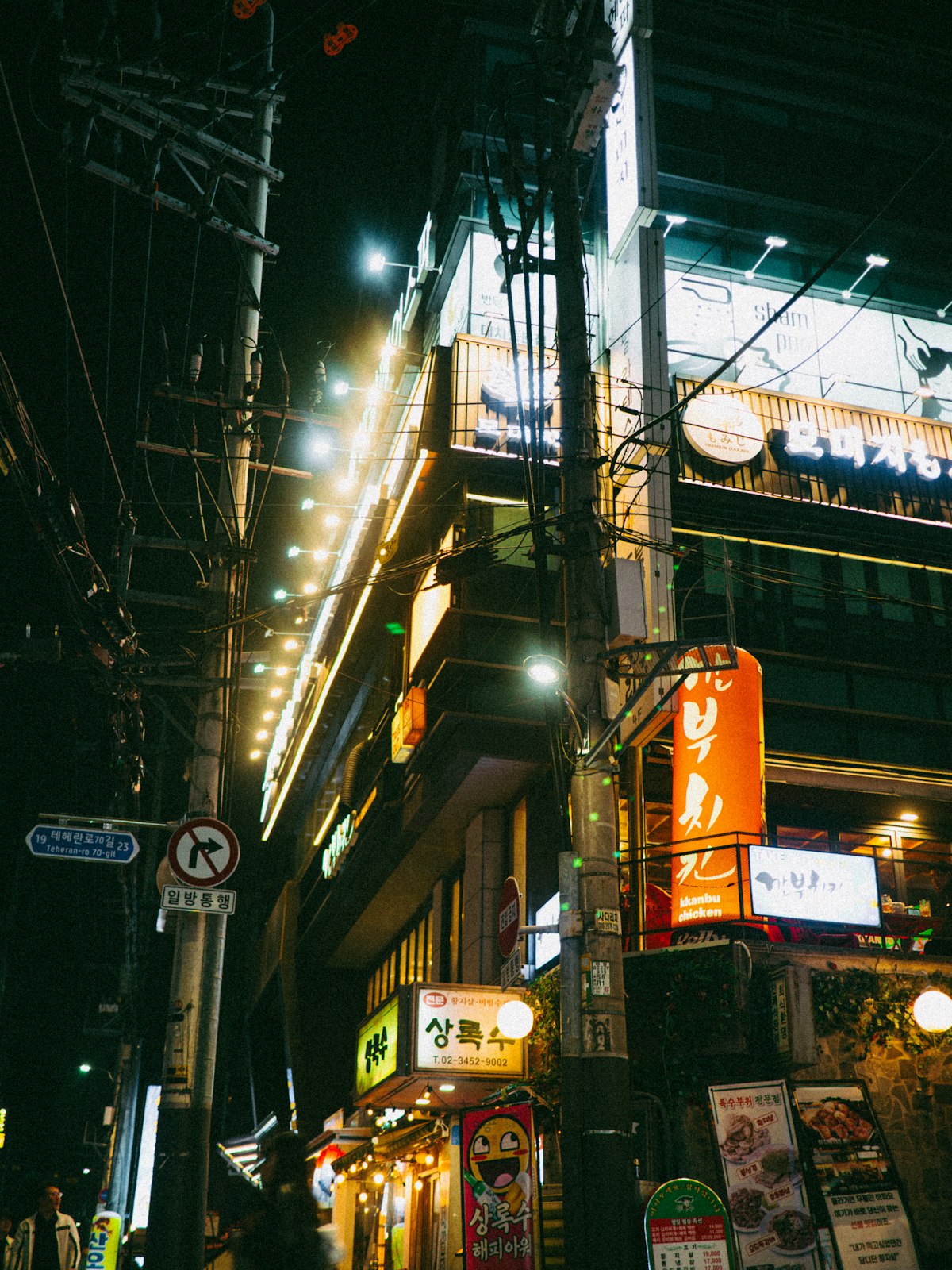

When I first moved to Seoul five years ago, I didn’t know a single lick of Korean. My first week was a comedy of errors. I remember wandering down a glowing, neon-drenched restaurant street at night, my stomach roaring for dinner. I spotted a lively restaurant where groups were laughing over sizzling pans of dakgalbi (spicy stir-fried chicken). Starving and naive, I walked in, held up a single finger, and smiled. The server immediately locked eyes with me, shook her head, and made a giant “X” sign with her forearms. “No, no. Two person minimum,” she said. I was mortified and retreated to my tiny goshiwon room with a cold convenience store triangle kimbap. It felt like a harsh rejection, but it was my very first lesson in Korean food culture.
Later that month, after accidentally boarding the green Line 2 subway going the wrong way at Dongdaemun History & Culture Park station—wasting a transit transfer fee and crying slightly on the platform—I stumbled out into the back alleys of Jongno. I found a tiny, steam-filled joint run by an elderly grandmother (halmoni). I nervously muttered a shaky “Honja-wayo” (I came alone). She smiled warmly, sat me down at a small corner table, and served me a steaming bowl of pork rice soup (gukbap) for just 8,000 KRW (about $6.00 USD). That night, I discovered the magic of Honbap (혼밥)—Seoul’s solo dining revolution. If you are planning a trip to Korea, you do not have to survive on convenience store food. You just need to know the local rules of the game.
- The Solo Revolution: Solo dining (Honbap) is rising, but communal meals still require a “two-portion minimum” (2인분).
- Safe Havens: Seek out Gukbap (soup) shops, Bunshik (snack bars), and department store basement food courts.
- The BBQ Loophole: You can eat Korean BBQ alone if you are willing to pay for and eat two portions of meat.
- Key Phrase: Memorize “Honja-wayo” (I came alone) to quickly secure a seat.
Understanding the “Two-Portion Rule” (2인분)

Historically, dining in Korea is a highly social, communal affair. Sharing dishes like Korean BBQ, hotpots, and army stew (budae jjigae) is deeply rooted in the culture of jeong (social bonding). Because these dishes require firing up a table burner, washing multiple side-dish plates (banchan), and using premium table real estate, restaurants set a strict policy: minimum two portions (2인분 – i-inbun) per table.
If you walk into a busy BBQ joint during peak hours (6:00 PM to 8:30 PM) on your own, you will likely face the dreaded “X” arm gesture. It is not personal, and it is not xenophobia. It is purely a business decision based on thin margins. The good news? You can easily bypass this rule by simply saying, “I-inbun juseyo” (Two portions, please). Yes, you will pay double—usually around 30,000 KRW to 36,000 KRW ($22 to $26 USD)—but you will get your own private grill feast without any awkwardness.
The Best Solo-Friendly Food Categories in Seoul
If you do not want to buy two portions of food, do not worry. Seoul has thousands of incredible eateries specifically designed for solo diners. Look out for these categories while exploring the city:
1. Gukbap and Jjigae (Soups and Stews)
These are the absolute holy grail of solo Korean dining. Served in boiling-hot stone pots (ttukbaegi), these meals are single-serve by nature. My go-to is Soondubu Jjigae (spicy soft tofu stew) or Dwaeji Gukbap (pork rice soup). They are cheap, incredibly filling, and usually cost between 8,000 KRW and 11,000 KRW ($6.00 to $8.50 USD). No one will blink an eye if you sit alone with a steaming pot of soup.
2. Bunshik (Korean Snack Bars)
Think of Bunshik shops as Korea’s classic fast-food diners. The most famous chain is Gimbap Cheonguk (Gimbap Heaven), recognizable by its bright orange or yellow signs. Here, you can order single portions of tteokbokki (spicy rice cakes), gimbap (seaweed rice rolls), and instant ramyeon. Ordering is usually done via a simple paper menu or an English-friendly kiosk. A massive meal here rarely exceeds 7,000 KRW ($5.00 USD).
3. Kisa Sikdang (Taxi Driver Diners)
This is my ultimate local secret. Kisa Sikdang are diners originally established to feed busy taxi drivers quickly. Because taxi drivers work alone, these restaurants are 100% optimized for solo customers. They serve fantastic, home-style Korean meals like Dwaeji Bulgogi (sweet soy-marinated pork) served on individual sizzling platters with unlimited self-serve side dishes. Expect to pay around 9,000 to 11,000 KRW ($6.50 to $8.00 USD) for a feast fit for a king.
4. Department Store Basement Food Halls
If you find yourself near Myeongdong or Gangnam, head directly to the basement floors of major department stores like Lotte, Shinsegae, or Hyundai. These basements house massive, high-end food halls with communal bar-counter seating. You can order everything from premium Japanese katsu to traditional cold noodles (naengmyeon). Because counter seating is the norm, it is an incredibly comfortable environment for solo travelers.
5. Traditional Street Markets
Just like those bustling street food stalls in Busan where vendors cook under giant market umbrellas, Seoul’s markets are incredibly solo-friendly. At spots like Gwangjang Market or Mangwon Market, you simply squeeze onto a wooden bench at a vendor’s stall, point to what you want, and eat. It is highly social, cheap, and there is zero pressure to order multiple portions.
Solo Dining Compatibility: Quick Reference
To help you plan your culinary adventures without the stress, here is a quick breakdown of how easy it is to dine solo across different Korean food categories:
| Dish / Dining Style | Solo-Friendliness | Average Price (KRW) | The Expat’s Verdict |
|---|---|---|---|
| Gukbap / Jjigae | Very Easy | 8,000 – 11,000 KRW | The absolute best option. Fast, healthy, and culturally expected to be eaten solo. |
| Bunshik (Snacks) | Very Easy | 4,000 – 8,000 KRW | Perfect for a quick lunch. Order at a kiosk and enjoy zero-fuss dining. |
| Kisa Sikdang | Very Easy | 9,000 – 12,000 KRW | Incredible value. Sizzling meats with unlimited banchan. Highly recommended. |
| Korean BBQ (Pork) | Medium (Requires 2 portions) | 30,000+ KRW (for two) | Skip peak hours. Tell them you will order 2 portions of meat up front. |
| Dakgalbi / Budae Jjigae | Challenging | 24,000+ KRW (for two) | Hard to finish alone due to massive carb-heavy portion sizes. Best with friends. |
Pro Tips for Tourists
- Use Naver Map, Not Google Maps: Google Maps is notoriously outdated and practically useless for walking directions in South Korea. Download Naver Map or KakaoMap to find highly rated solo dining spots near you.
- Look for the Ticket Kiosks: Many modern solo-dining establishments (like fast-ramen bars or bunshik joints) have touch-screen kiosks at the entrance. Almost all of them have an English language button and accept foreign Visa/Mastercard.
- Eat Off-Peak: If you want to try a place that is typically communal, go between 1:30 PM and 5:00 PM. Staff are much more relaxed and willing to accommodate a solo diner when the restaurant is half-empty.
- Learn the Magic Words: Walk in and confidently say “Honja-wayo” (혼자 왔어요 – I came alone) or “Il-myeong-iyeo” (일명이요 – One person). It shows you respect local customs and helps the host seat you at an appropriate small table.
- Water and Side Dishes are Self-Service: If you see a sign that says “물은 셀프” (Mul-eun sel-peu), go grab your own water cup from the stainless-steel sterilizer cabinet. The same often applies to extra kimchi and yellow pickled radish.
Frequently Asked Questions
Is it weird or embarrassing to eat alone in Seoul?
Not anymore! While it was uncommon a decade ago, the “Honbap” (solo eating) movement is massive now. Single-person households make up over 30% of Seoul’s population. You will see plenty of local university students, office workers, and expats eating alone at all times of the day.
What should I do if a restaurant turns me away?
Do not take it personally. It is almost always because the menu items require a two-portion stove setup, or they are fully booked. Simply smile, say “Gamsahabnida” (Thank you), and walk out. There is guaranteed to be a solo-friendly soup spot, convenience store, or bunshik diner just a few doors down.
Do I need to tip at restaurants in Korea?
Absolutely not. Tipping is not part of Korean culture, and in some cases, it can actually be seen as confusing or slightly insulting. The price you see on the menu is exactly what you pay, tax included. Simply take your bill to the front register near the door when you are finished and pay there.