
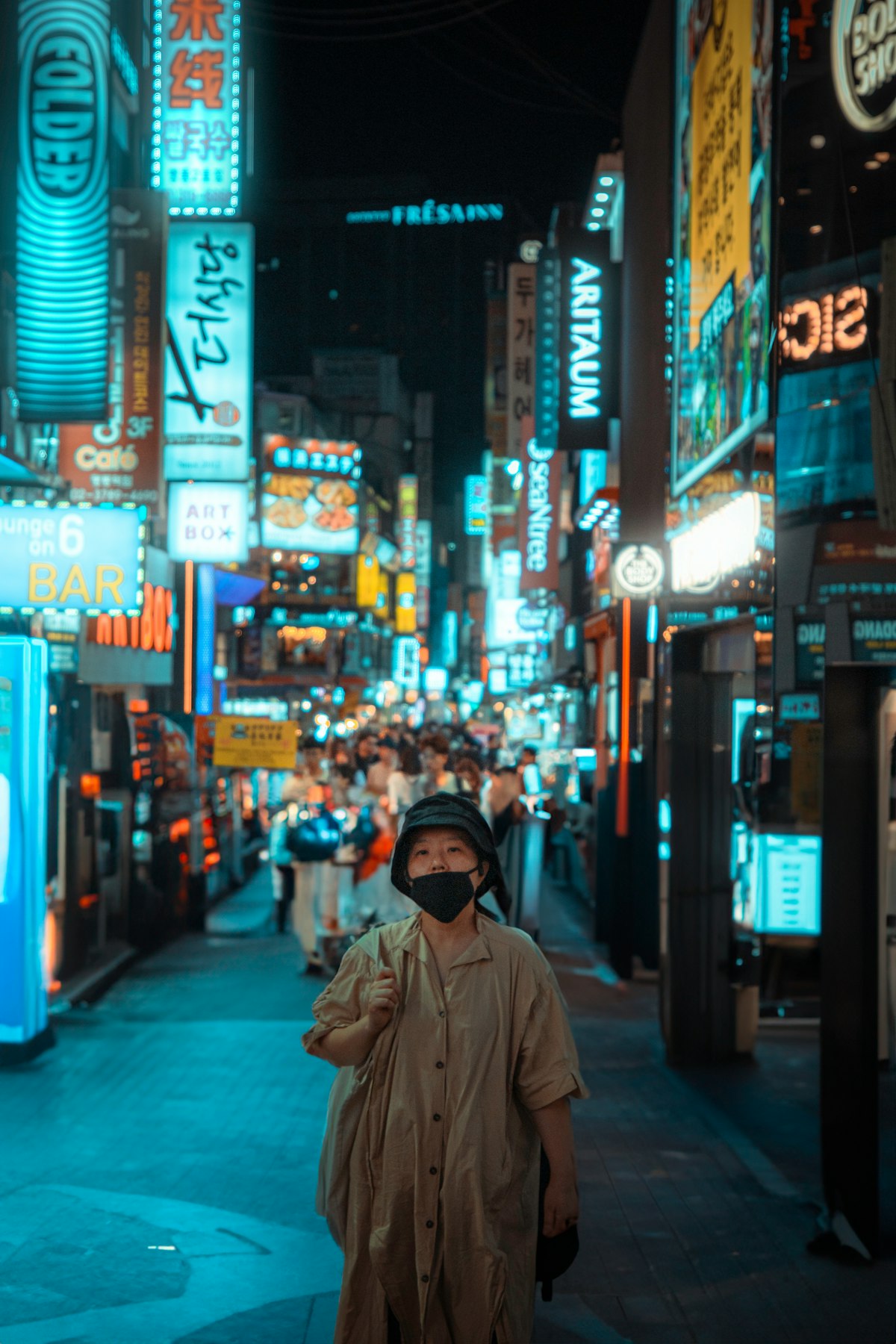

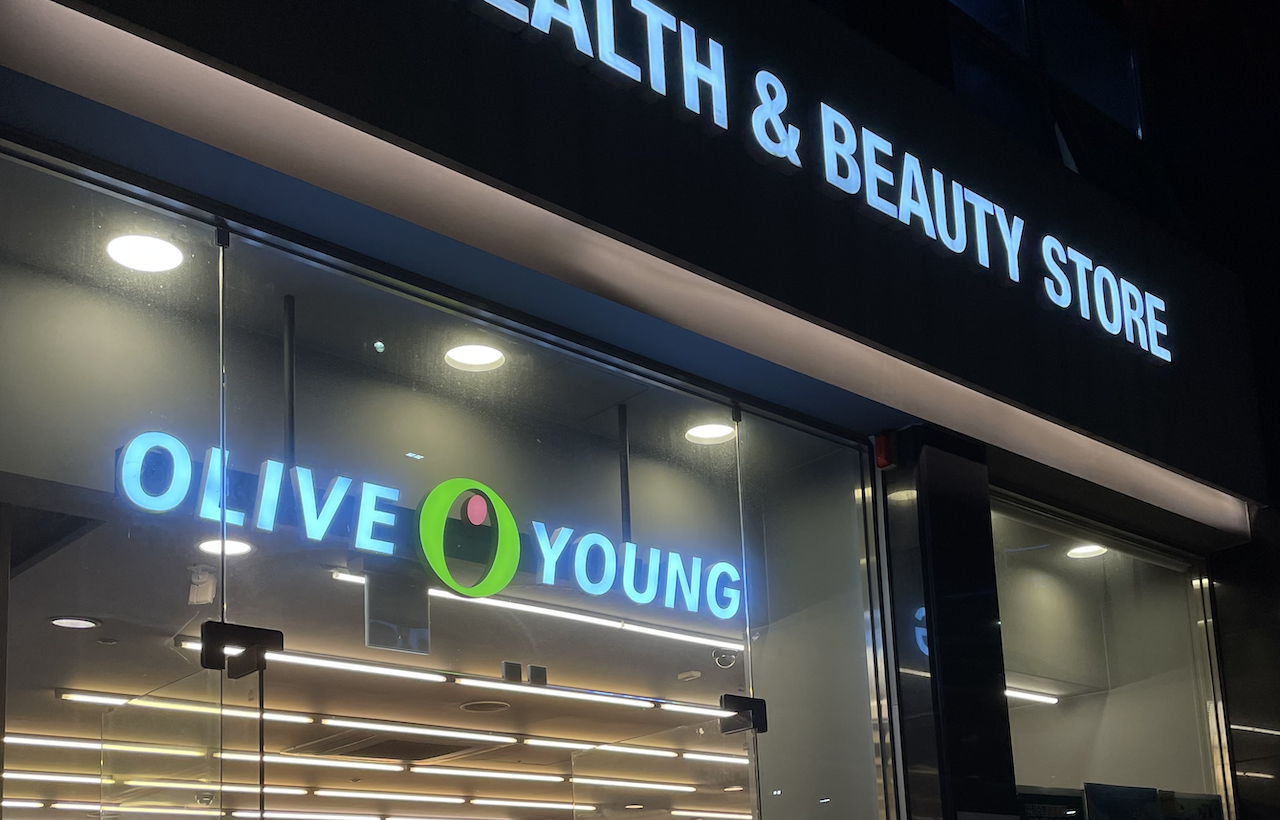
When most travelers think of shopping in Seoul, they picture the neon-drenched streets of Myeongdong at night, lined with glowing ARITAUM and ARTBOX beauty shop signs. Or perhaps they envision the bright, sterile warmth of a lit Olive Young health and beauty store on a bustling commercial street. Don’t get me wrong—I love a good skincare haul as much as anyone who has lived in this city for five years. But if your style leans more toward one-of-a-kind vintage threads, oversized 90s windbreakers, and the thrill of the hunt, you need to abandon the pristine cosmetic aisles and head east. You need to experience the beautiful, chaotic madness of the Dongmyo Flea Market.
Dongmyo is not your typical curated vintage boutique scene. It is a living, breathing sensory overload where Seoul’s trendiest fashion students rub shoulders with local grandfathers (harabojis) digging through literal mountains of clothes piled on the asphalt. It is gritty, fast-paced, and absolutely brilliant if you know how to navigate it. After half a decade of thrift shopping here, I have made every mistake possible so that you don’t have to.
- Best Time to Visit: Weekdays between 2:00 PM and 5:00 PM for fewer crowds; weekends for the maximum number of sellers (but prepare for intense foot traffic).
- What to Bring: Plenty of cold hard cash (KRW), a sturdy tote bag, hand sanitizer, and a sharp eye.
- Average Prices: 2,000 KRW to 10,000 KRW ($1.50 to $7.50 USD) for street piles; 15,000 KRW to 50,000 KRW ($11 to $37 USD) for curated vintage shops.
- How to Get There: Dongmyo Station (Line 1 & 6), Exit 3. Turn around immediately, and you are in the thick of it.
Getting Lost (and Found) at Dongmyo Station
When I first moved to Seoul five years ago, one of my very first solo excursions was to Dongmyo. Fresh off the plane, I managed to make a classic rookie mistake at the subway gate. Dongmyo Station is a notoriously chaotic transfer point between Line 1 and Line 6. I swiped my T-money card on the wrong side of the turnstile, heading toward the wrong direction platform. Stranded, confused, and unable to climb back over, I had to use the “help” gate button, trying to explain to a very patient station assistant in my non-existent Korean that I just wanted to get to the flea market exit. He laughed, buzzed me through, and pointed me toward Exit 3. It was my first real taste of local kindness, and it taught me to always double-check the overhead signs before tapping my card.
Once you successfully navigate Exit 3, you are immediately greeted by the smell of incense, old paper, and street food. The market sprawls across several alleys surrounding the Dongmyo Shrine (a historic walled compound built to honor the Chinese military commander Guan Yu). The contrast is wild: centuries-old stone walls on one side, and piles of discarded leather jackets, vintage cameras, and retro cassette players on the other.
The Two Worlds of Dongmyo: Dirt Piles vs. Curated Boutiques
To conquer Dongmyo, you must understand its layout. The market is essentially divided into two distinct shopping experiences, and I highly recommend doing a bit of both depending on your patience level.
1. The Street Piles (The “True” Thrift Experience)
This is where the real magic—and sweat—happens. Vendors dump massive truckloads of clothing directly onto tarps on the ground. Everything in these piles usually costs between 2,000 KRW and 5,000 KRW ($1.50 to $3.75 USD). If you buy multiple pieces, the seller will often shout a discount, like “three for 5,000!”
My go-to strategy here is simple: roll up your sleeves, crouch down, and start digging. You have to physically lift and shake out garments. You will find everything from vintage Ralph Lauren polo shirts and retro Korean high school gym jackets to weirdly specific corporate merch from 1990s Japanese tech companies. It is a treasure hunt in the truest sense of the word.
2. The Curated Vintage Shops (The Hipster Alleys)
If digging through dusty mounds of clothes on the street sounds like your personal nightmare, don’t worry. If you wander down the side alleys away from the main shrine wall, you will find brick-and-mortar vintage boutiques. These shops are highly curated, beautifully organized, and usually run by incredibly stylish young Koreans playing lo-fi hip-hop.
Here, the clothes have been washed, ironed, and hung on racks. You will pay a premium for this convenience—expect prices to range from 15,000 KRW to 50,000 KRW ($11 to $37 USD) for high-quality vintage denim, Carhartt jackets, and retro windbreakers. While I love the thrill of the piles, I always stop by these shops to look for specific statement pieces like vintage leather trench coats or rare band tees.
Surviving the Hunt: A Lesson in Warmth and Noodles
Thrifting is hard work, especially during Seoul’s extreme seasons. I remember one freezing afternoon in January during my second year here. My fingers were literally numb from digging through a massive pile of 3,000 KRW heavy winter coats. Just as I was about to give up, defeated by the biting wind, I smelled toasted sesame oil drifting from a tiny gap between two buildings.
I followed my nose down a narrow, unmarked alleyway and stumbled into a tiny, steamy noodle shop. There were only four stools. For just 5,000 KRW (less than $4 USD), the grandmother running the place handed me a massive, steaming bowl of handmade kalguksu (knife-cut noodles) topped with fresh seaweed and a side of incredibly spicy, perfectly fermented kimchi. That meal did not just save my frozen hands; it cemented Dongmyo as my absolute favorite neighborhood in Seoul. Take time to explore the food stalls; the cheap eats here are legendary.
Dongmyo vs. Other Seoul Shopping Districts
To help you budget your time and money, here is how Dongmyo compares to other famous shopping areas in Seoul:
| Shopping District | Vibe | Average Price (KRW) | Best For |
|---|---|---|---|
| Dongmyo Flea Market | Chaotic, historic, raw, local | 2,000 – 30,000 KRW | Vintage clothes, retro items, cheap street food |
| Myeongdong | Modern, crowded, commercial, bright | 15,000 – 80,000 KRW | Korean skincare, fast fashion, tourist souvenirs |
| Hongdae (Vintage Area) | Trendy, youthful, highly curated | 30,000 – 100,000 KRW | 90s streetwear, designer vintage, trendy accessories |
Pro Tips for Tourists
- Bring Cash: While some brick-and-mortar shops accept cards, the street vendors operating the piles only take cash or local bank transfers. Carry 10,000 KRW and 1,000 KRW notes for easy transactions.
- Wear Easy-to-Remove Shoes and Fitted Clothes: There are no changing rooms in the street piles. If you want to try on a jacket or coat, you will have to do it right there on the sidewalk. Wear a fitted t-shirt so you can easily slip items over it.
- Inspect Everything Thoroughly: Street pile items are sold “as-is.” Check for missing buttons, broken zippers, and hidden stains before handing over your cash. There are absolutely no refunds or exchanges.
- Don’t Haggle Excessively: While polite bargaining is acceptable if you are buying 4 or 5 items from the same seller, do not aggressively haggle over a 3,000 KRW shirt. It is already incredibly cheap, and it is considered disrespectful to the older vendors.
- Bring a Backpack or Large Tote: Sellers will give you thin plastic bags, but carrying five different plastic bags through a crowded market is a recipe for losing something. Bring a comfortable backpack to stuff your finds into.
Frequently Asked Questions
Are the clothes at Dongmyo Flea Market clean?
The clothes in the curated brick-and-mortar shops are usually washed and ready to wear. However, the items in the large street piles come straight from recycling bins and storage units. They will have a distinct “thrift store” smell and may have dust on them. I highly recommend taking your haul straight to a local coin laundry (called a Coin Wash in Korea) or washing them thoroughly at your accommodation before wearing them.
Is Dongmyo open every day?
Yes, Dongmyo is open daily, but the vibe changes drastically. Weekdays are much quieter, with fewer street vendors but plenty of room to breathe and browse. Weekends (Saturday and Sunday) are when the market truly comes alive, with hundreds of temporary stalls lining every square inch of pavement. Note that vendors usually pack up and leave if it rains heavily, as most of their stock is outdoors.
Can I find luxury brands at Dongmyo?
Yes, but you need to be careful. You will frequently see brands like Burberry, Ralph Lauren, Tommy Hilfiger, and YSL. In curated shops, these are usually authenticated and priced accordingly. In the street piles, you might find genuine vintage gems for next to nothing, but counterfeit goods are also common. Inspect the labels, stitching, and material quality closely if you are looking for authentic luxury pieces.