

When I first moved to Seoul five years ago, I made a classic rookie mistake that still makes me cringe. I was planning my very first weekend getaway to Busan from my tiny studio apartment near Itaewon. Every morning, I would walk past the iconic red-and-yellow Itaewon subway station Exit 1 sign, feeling like a seasoned global explorer. But when it came to booking my train ticket, I completely botched it. I saw a blog post praising a “sleek, modern, and cheaper” high-speed train called the SRT. Without checking a map, I eagerly booked a ticket departing from Suseo Station. It wasn’t until the morning of my trip that I realized Suseo was located in the far southeastern corner of Seoul—nearly an hour-long subway trek from my place, whereas the historic Seoul Station was just a quick fifteen-minute taxi ride away. I spent more time commuting to the train station than I actually saved on the high-speed tracks.
If you are planning a trip to South Korea, you are going to face this exact same dilemma: KTX or SRT? Both of these sleek, high-speed trains will whisk you across the peninsula at speeds exceeding 300 km/h (186 mph), transforming a tedious five-hour drive to Busan into a breezy two-and-a-half-hour journey. But they are operated by different companies, depart from completely different hubs, and offer vastly different booking experiences for foreign travelers. Let’s break down the honest, lived-in truth about which train you should actually book so you don’t repeat my early transit blunders.
- Choose KTX if you are staying in central, northern, or western Seoul (Myeongdong, Hongdae, Itaewon) and want a seamless, tourist-friendly booking experience.
- Choose SRT if you are staying in southern Seoul (Gangnam, Jamsil) and want to save about 10% on ticket prices while enjoying slightly more legroom.
- The Golden Rule: Let your hotel location dictate your station choice. Do not cross the Han River just to save a few thousand Won.
The Heavyweight Champion: Korea Train eXpress (KTX)

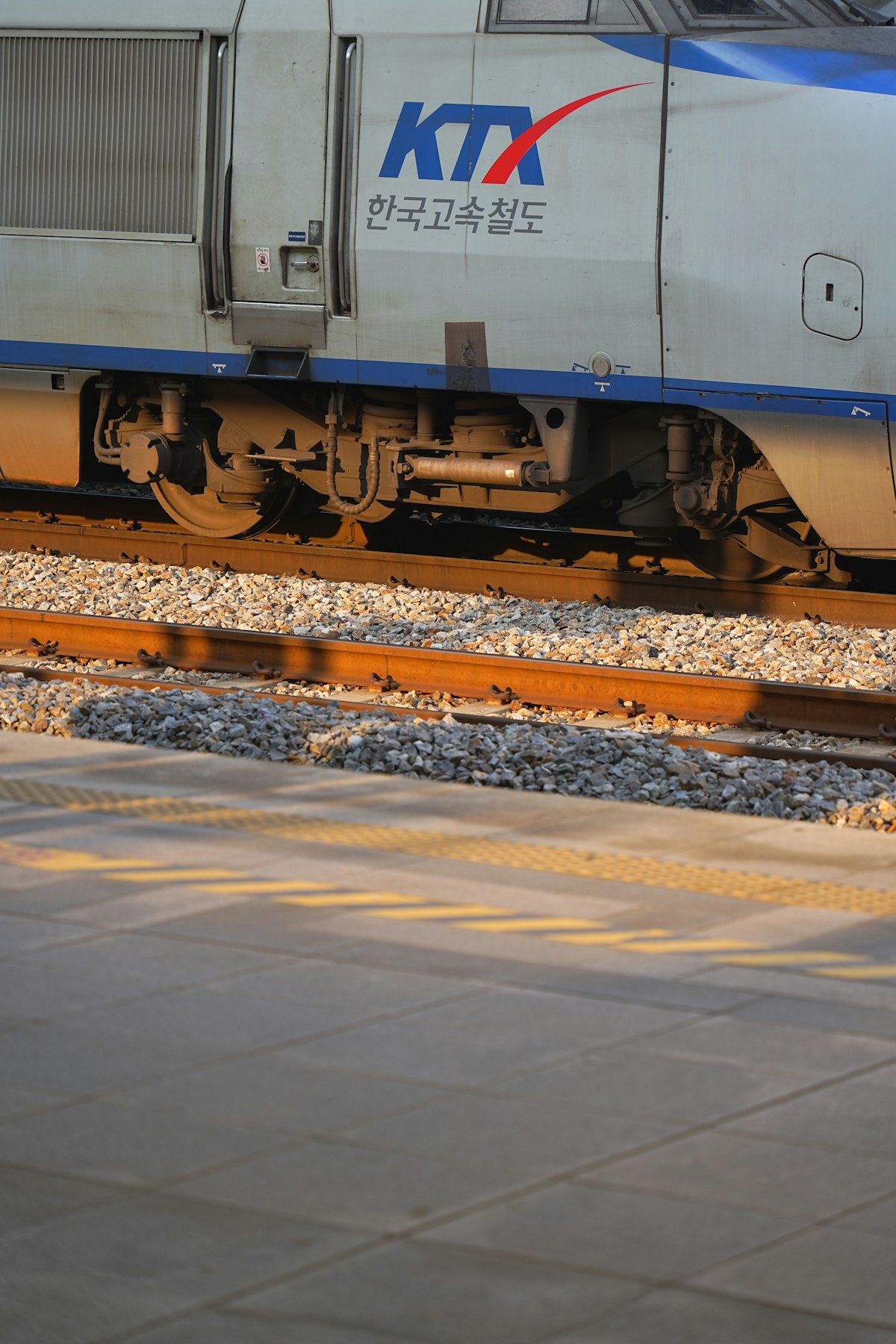
The KTX is the undisputed king of Korean rail. Operated by the national railway company, Korail, it has been the backbone of domestic travel since 2004. For most international tourists, the KTX is going to be the default choice, and for good reason. It operates out of Seoul Station (the main transport hub in the heart of the city) and Yongsan Station (just next to Itaewon).
Because it is run by the national carrier, the booking infrastructure for KTX is incredibly robust for foreigners. You can easily navigate the official “Let’s Korail” website in English, or download the Korail Talk app. They accept foreign credit cards without throwing a digital tantrum—a rare feat for Korean websites. A standard one-way ticket from Seoul to Busan on the KTX will run you about 59,800 KRW (approximately $45 USD). It is reliable, frequent, and connects to almost every major tourist destination in the country, including Gyeongju, Jeonju, and Gangneung.
The Sleek Challenger: Super Rapid Train (SRT)
Launched in 2016, the SRT is the newer, slightly flashier kid on the block. It operates on a dedicated line starting from Suseo Station in southeastern Seoul. The trains themselves are modern, boast slightly more legroom than the standard KTX, and feature power outlets at every single seat (whereas older KTX trains only have them scattered along the walls).
I remember taking the SRT down to Daegu a couple of years ago to visit a friend. I had to catch a 6:30 AM train, which meant boarding the Seoul subway at dawn. I remember sitting in an empty Seoul subway car, watching the green seats and blue hand straps sway in the quiet morning light, clutching a hot convenience store coffee. Once I finally reached Suseo, the SRT experience itself was fantastic. The ride was incredibly smooth, and the ticket was cheaper—costing around 52,600 KRW (about $40 USD) to Busan. However, booking the SRT online as a foreigner can still be a massive headache. The official SRT app often rejects overseas credit cards, forcing many tourists to rely on third-party booking platforms like Trip.com, which charge a small markup, or buying tickets in person at the station.
Head-to-Head: KTX vs SRT
To help you visualize the practical differences, here is a direct comparison of the two services for a standard journey from Seoul to Busan:
| Feature | KTX (Korea Train eXpress) | SRT (Super Rapid Train) |
|---|---|---|
| Primary Seoul Hubs | Seoul Station, Yongsan Station, Cheongnyangni | Suseo Station (Gangnam area) |
| Average Price (to Busan) | ~59,800 KRW (~$45 USD) | ~52,600 KRW (~$40 USD) |
| Booking Ease | Excellent (English website & app accept foreign cards) | Difficult (Official app often rejects foreign cards) |
| Seat Comfort & Outlets | Good (Outlets limited on older models) | Excellent (More legroom, outlets at every seat) |
| Destination Network | Extensive (Covers almost all major cities) | Limited (Mainly Gyeongbu & Honam lines) |
My Honest Verdict: Which One Should You Book?
Here is my unfiltered advice after half a decade of navigating Korea’s transit systems: 90% of tourists should just stick to the KTX.
If you are visiting Korea for the first time, you are likely staying in highly popular tourist neighborhoods like Myeongdong, Hongdae, Insadong, or Itaewon. All of these neighborhoods have direct, straightforward subway or taxi connections to Seoul Station or Yongsan Station. Dragging your heavy suitcases through multiple subway transfers just to reach Suseo Station in the south is exhausting, and it will completely erase the 7,000 KRW ($5 USD) you saved on the ticket price.
However, the SRT is a clear winner if you are staying in southern Seoul. If your hotel is in Gangnam, Jamsil (near Lotte World), or Yeoksam, do not bother traveling up to Seoul Station. Suseo Station is incredibly modern, easy to navigate, and directly connected to Subway Line 3 and the Suin-Bundang Line. It will save you both time and sanity.
Pro Tips for Tourists
- Book 3 to 4 weeks in advance: High-speed trains in Korea sell out incredibly fast, especially for weekend travel (Friday afternoon to Sunday evening). Do not expect to walk up to the counter on a Saturday morning and get a seat to Busan.
- Consider the Korail Pass (KR Pass): If you plan on taking multiple long-distance KTX trips within a few days (e.g., Seoul to Gyeongju, then Gyeongju to Busan, and back to Seoul), the Korail Pass offers unlimited rides for a set period and can save you a massive chunk of cash. Note that this pass cannot be used on the SRT.
- Avoid major national holidays at all costs: During Chuseok (Korean Thanksgiving) and Seollal (Lunar New Year), booking a train ticket is virtually impossible. Millions of locals compete for tickets the second they go on sale, crashing the servers. If you are in Korea during these holidays, plan to stay put in Seoul.
- Grab snacks at the station: While there are small vending machines on the trains, there are no longer dining cars. Do what the locals do: grab a box of hot, walnut-shaped cakes (hodu-gwaja) or a fresh roll of gimbap from the station platforms before boarding. Eating at your seat is perfectly acceptable and highly recommended!
Frequently Asked Questions
Can I use my T-Money transit card to pay for the KTX or SRT?
No, you cannot. T-Money cards are strictly for local city transit (subways, city buses, and some local taxis). For high-speed trains like the KTX and SRT, you must purchase a separate, dedicated seat ticket online or at the station ticket counter.
Is there dedicated space for large suitcases on these trains?
Yes, both KTX and SRT trains have dedicated luggage racks at the end of each passenger car for large suitcases. There are also overhead racks for smaller carry-on bags. If you have exceptionally large bags, try to board the train early so you can snag a spot in the luggage racks before they fill up.
What happens if I miss my high-speed train?
If you miss your train, do not panic. Go straight to the station ticket counter immediately. If you cancel your ticket before the train reaches its final destination, you can get a partial refund (minus a cancellation fee that increases the longer you wait). Alternatively, staff can help you book the next available departure, though you may have to accept a “standing room only” ticket if the seats are fully booked.